
How to Build a Trolling Pattern & Prospect for Trout
How to build a trolling pattern for trout by fishing systematically, prospecting a lake, and changing one variable at a time.
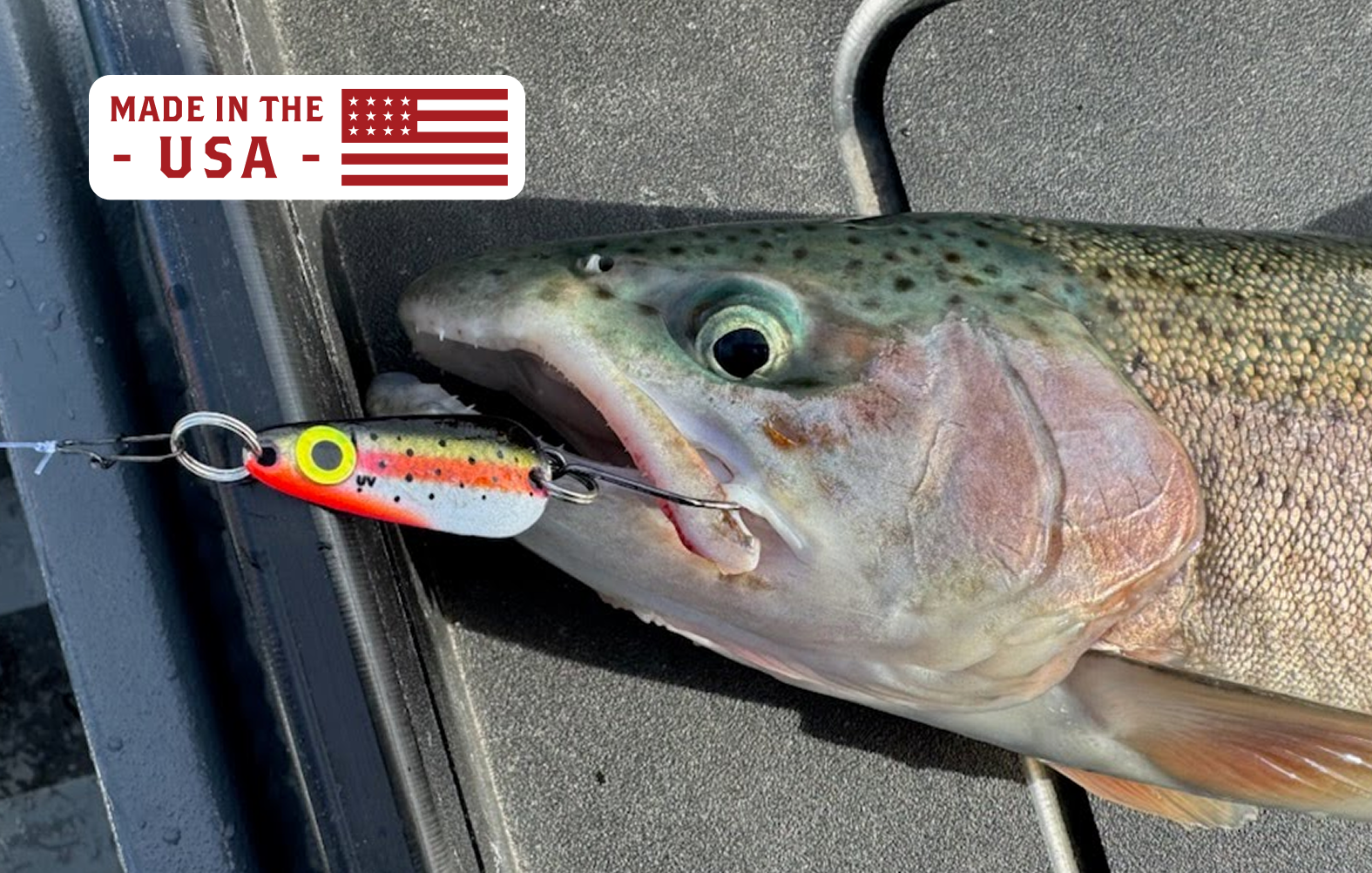
Build a trolling pattern by treating the first fish as chance and the second and third as a signal. When two or three trout hit the same bait fast, stack more of that bait in your spread. Run a confidence rod with a proven lure like a Trix Minnow plus an experimental rod, then change one variable at a time: depth, speed, color, shape, or flash. Small moves matter. Cal caught twice as many trout at 30 to 32 feet as at 25 feet with the same lure. Use sonar to find fish, then let them tell you what they want.
How do I build a trolling pattern for trout?
One fish is chance. When you get a second and third fish quickly on the same bait, you have a pattern starting. Cal stacks more of the winning lure into his spread to maximize the bite. Each fish on a Trix Minnow earns another Trix Minnow in the water, so he cashes in while the fish are still feeding.
What does it mean to fish systematically for trout?
It means reading the environment instead of guessing. Cal puts little stock in location. He evaluates conditions, decides what depth the fish should hold, uses sonar to confirm which areas actually hold trout, then presents accordingly. A haphazard one or two lure approach produces erratic results, while a systematic plan gets the best response any day, anywhere.
How do I prospect a new lake for trout?
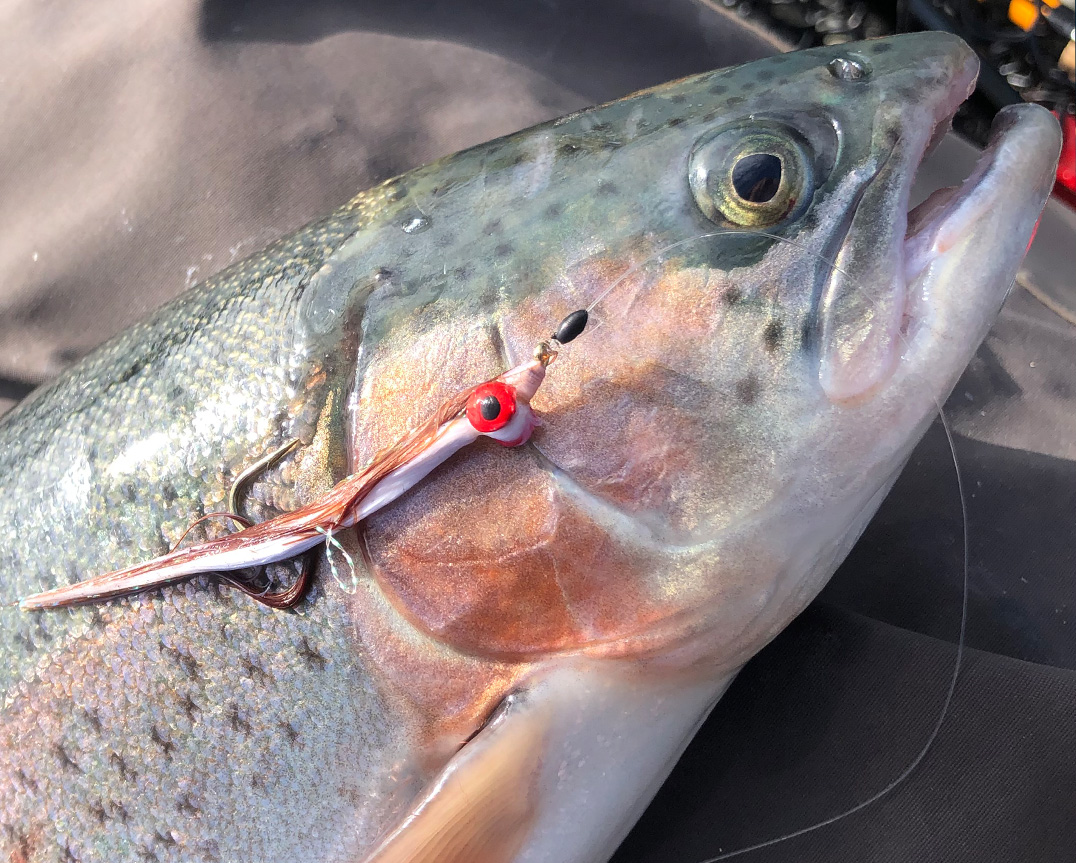
Start with the last bait that worked as a confidence rod and keep it in the water. Cal runs an orange Trix Minnow as his benchmark and a second experimental rod, often a Metal Head Fly in a new color. If the experiment outfishes the benchmark, the bite has changed and he chases that.
How much does trolling depth matter for trout?
A lot, and the change can be small. At Prosser Reservoir Cal caught twice as many trout at 30 to 32 feet as his cousin did at 25 feet, running the exact same lures. When the cousin dropped a few feet deeper, his hookup rate doubled. A 5 foot adjustment can be the whole difference in a pattern.
How do I use two rods to dial in a pattern?
California allows two rods, so run one confidence rod and one experimental rod. Change a single variable at a time on the experimental line: drop or raise it 5 feet, switch color, change lure shape, or alter flash and vibration. Vary boat speed and zigzag too. Test each factor independently so the fish tell you exactly what they want.
Should I change lures when the bite stops?
Usually no. Cal waits out a lull rather than swapping gear, because fish that were eating a bait will often eat it again when they turn back on. The one thing that makes him change is a conditional shift. When clouds gave way to bright sun and chop, he traded a black fly for a smaller white fly and kept catching. Make changes incrementally.
What is Cal's plan for a tough trout lake?
Have an A, B, and C plan and ignore negative reports. Cal's A plan comes out fast at 2.3 to 2.6 mph with Metal Head Flies on leadcore at 5, 10, and 15 feet plus a top lined plug 175 to 200 feet back. Plan B slows down for soft plastics. Plan C runs a threaded worm on a slow death hook off the downrigger over deeper marks.
How do I run many trolling lines without tangles?
Sequence and stagger them. Your furthest outside lines are the longest, lightest, and shallowest. As you move toward the back of the boat, lines get shorter and weights get heavier. Divers ride tight and inside, downriggers straight off the stern. Follow that longest and lightest outside, shortest and heaviest inside rule and six to ten lines stay separated all day.
Watch the technique
Building a trolling pattern for trout FAQ
Depth, lure shape, lure speed, lure color, and lure vibration or flash. Cal changes them one at a time so he knows exactly which factor turned the bite on. That is why one spoon outperforms another on a given day.
One fish could be luck on anything. Two or three fish in a short window on the same bait means you are onto something. That is Cal's cue to stack more of that bait in the spread and press the bite while it lasts.
No. Cal ignores negative dock talk. Two anglers told him a lake was a grind, then he caught quality trout. Have an A, B, and C plan, assume you can catch, and fish your plan instead of another angler's mindset.
He often comes out fast at 2.3 to 2.6 mph to cover ground, then slows as a plan B. His logic is that if he can get them going slow he can usually speed up, but rarely the other way around.
The confidence rod carries the last proven bait and stays in the water as a benchmark. The experimental rod tests a new color, bait, or depth. Comparing the two tells Cal whether the bite has shifted and what to switch the whole spread to.
Metal Head trolling flies from 5 to 15 feet deep took every fish, in pink and white, orange, brown, and black. That day he got zero hits on spoons and zero on soft plastics like grubs, Trix Minnows, and Trix Worms.
Cal noted a 56 degree surface temp as ideal for a spring trout troll, with a light breeze. Cool water lets released fish recover fast, and he revived a floating rainbow in the net in about 30 seconds before it swam off.
Cal watches how fish are hooked to read the bite. When trout are well hooked back in the mouth rather than nipping, he knows they are committing and landing them is no problem. Soft takes that barely load the rod signal a need to downsize or slow down.