
How to Set Up a Kayak for Trolling Trout & Salmon
A step by step kayak trolling setup for trout and salmon covering safety, depth control, speed, and lures with Cal Kellogg.
Set up a pedal kayak for trolling by starting with safety, then depth control, then a simple lure spread. Always wear a PFD and carry a cutting tool. Mount rod holders on your dominant side, add a fish finder with mapping, and rig depth control three ways: lead core for the top 15 to 25 feet, a small downrigger for summer depths, and floating jet divers for 25 to 40 feet. Cal Kellogg trolls his favorite 1.8 mph pulling Trigger Spoons, Trix soft plastics, and trolling flies.
How do I set up a kayak for trolling trout and salmon?
Build it in order. Cal Kellogg starts with safety gear, then depth control, then a compact lure selection. A pedal kayak like a Hobie ProAngler is stealthy and lets you steer baits with your feet. Rig rod holders on your dominant side, add a mapping fish finder, and carry lead core, a small downrigger, and jet divers so you can reach any depth.
What safety gear do I need for kayak fishing?
A personal flotation device, worn at all times, comes first, even for a dog aboard. Cal Kellogg also carries a cell phone, sometimes a beacon, a line cutter, and an emergency knife for cutting rope or downrigger cable. Just as important is judgment. If wind, cold, or your gut says do not go, stay off the water and fish another day.
How should I arrange rod holders and a net on a kayak?
Mount your rod holders on your dominant side so you can watch both rod tips and net over either rail. Keep one holder flat for lead core or top-lining and one that tilts up to load a downrigger rod. Add a vertical rocket-launcher holder to store rods and keep the cockpit open. Use a full-rubber landing net with a long reach, tethered to the kayak.
How do I control depth when trolling from a kayak?
Use three tools. Cal Kellogg runs lead core for the top 15 to 25 feet in fall, winter, and spring, a small Scotty downrigger for deep summer fish, and floating jet divers for the 25 to 40 foot range. Match the tool to the season, because trout stratify by temperature, from the top 10 feet in cold water down to 60 or 70 feet in summer.
How do I set depth with lead core on a kayak?
Count colors. Cal Kellogg's 6 foot 6 inch lead core rods hold three colors over braid backing and a 50 foot mono top shot. Each color is 30 feet long and sinks the lure about 5 feet, so one color runs 5 feet down and two and a half colors around 12 feet. Note the colors out when you hook up so you can return to that exact depth.
What speed should I troll from a kayak?
Cal Kellogg defines slow as 1.5 to 2 mph, medium as 2 to about 2.7 mph, and fast above that up to 4 mph. Beginners should stick to slow and medium. His favorite trout speed is 1.8 mph. A pedal kayak cuts water so efficiently you have to hold back, because excitement pushes you past your target speed fast.
What lures do I need to start kayak trolling?
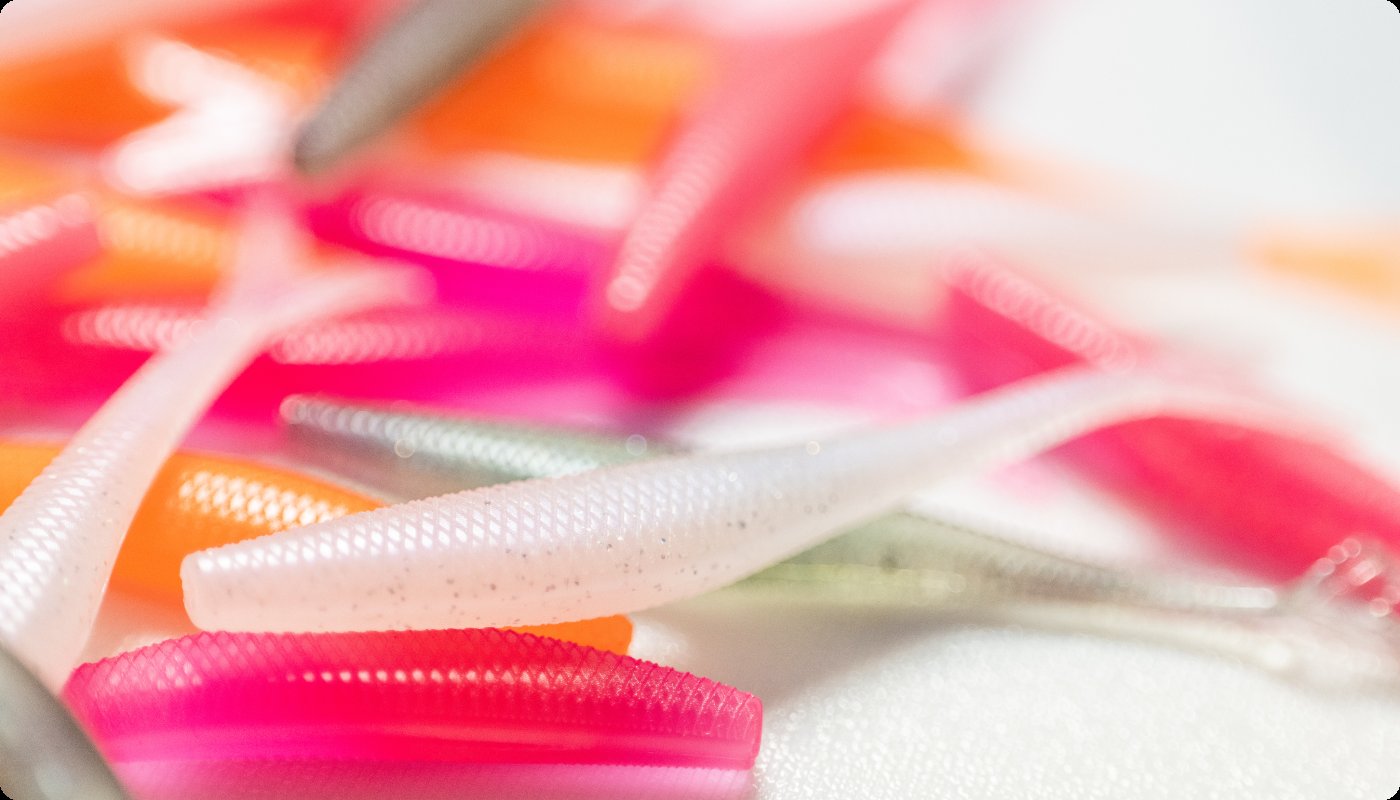
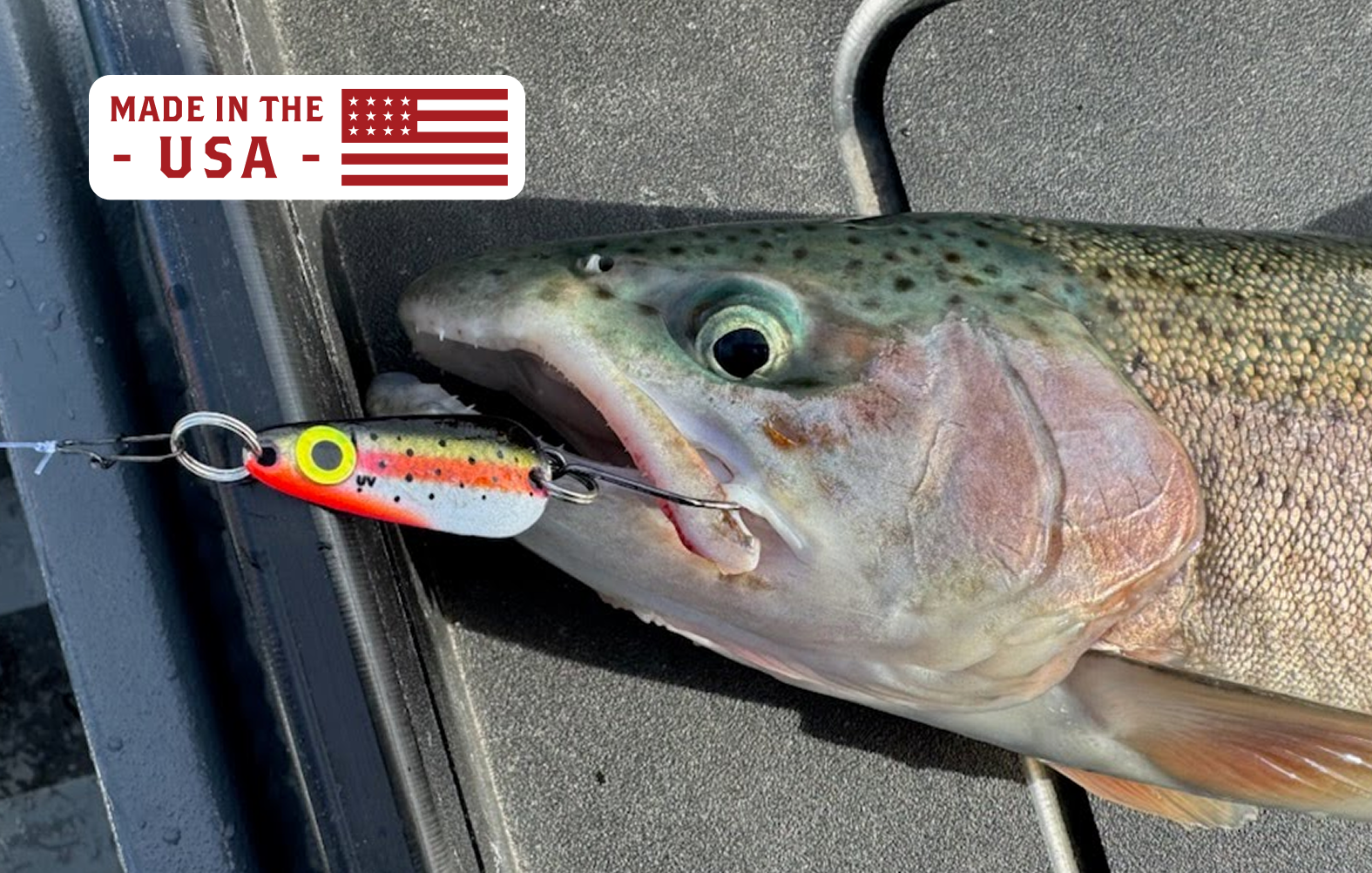
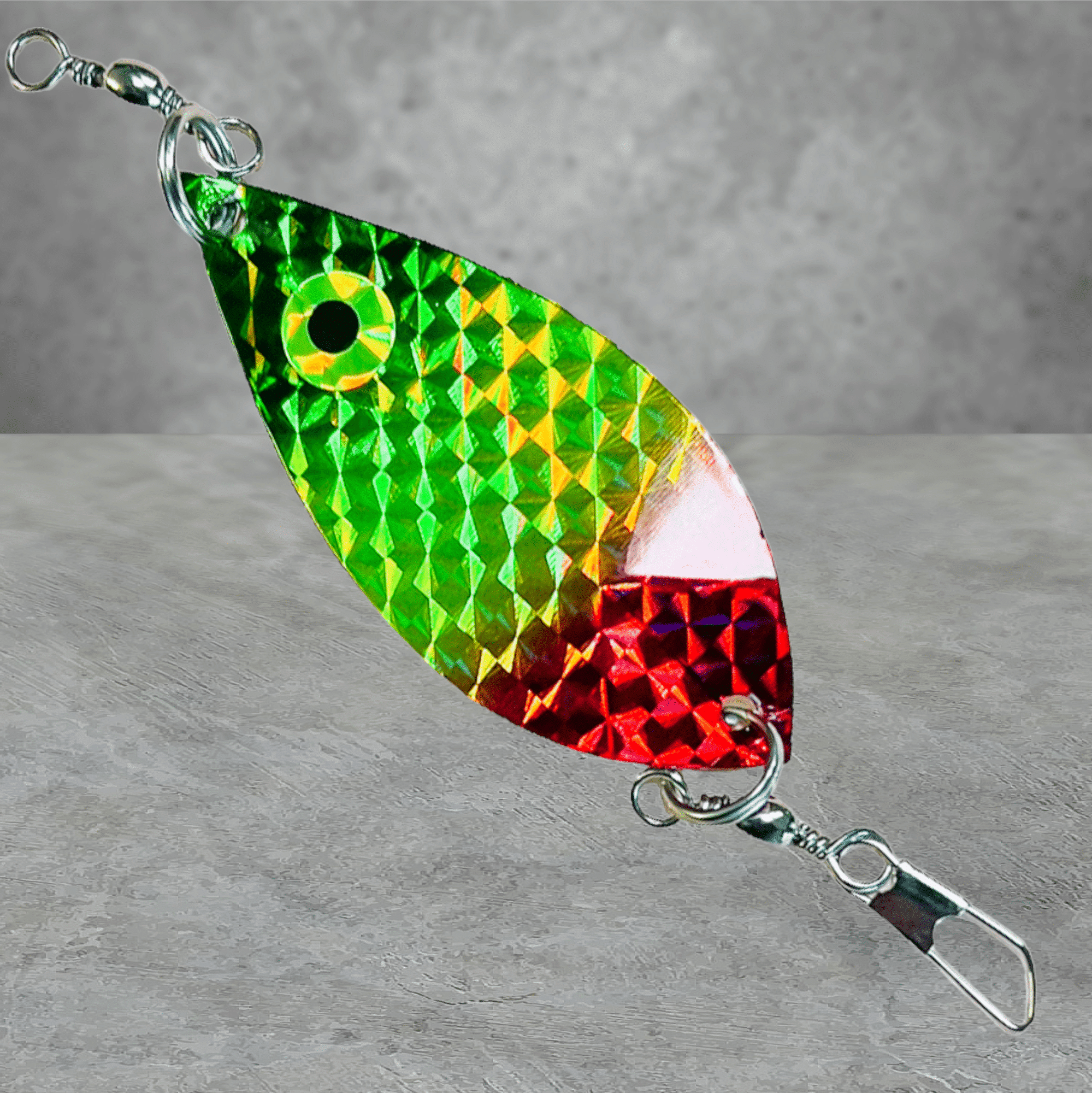
Keep it simple. Cal Kellogg carries Trigger Spoons and Trigger Juniors, Uncle Larry's spinners rigged with a worm, Trix soft plastics, Metal Head and Trigger flies, a few small plugs, and nightcrawlers. A few colors in each category cover most days.
Why is a pedal kayak good for trolling trout and salmon?
Because you fish the baits directly with your feet. A pedal kayak is stealthy, works tight to shore and on small lakes, and lets you zigzag and make sharp turns to trigger fish. Cal Kellogg even gets on and off the pedals to actively hook short strikers, a trick he now brings back to his power boat for extra fish.
Watch the technique
Kayak trolling setup for trout and salmon FAQ
Start with trout. Cal Kellogg points out there are far more lakes with trout than with kokanee or kings, and trout are generally simpler to catch. Rainbows live in foothill, valley, and high mountain lakes, so beginners get the most water and the shortest learning curve by targeting them first.
A small manual unit like a Scotty mounts easily and stores in a forward hatch. Cal Kellogg mounts his at an angle to account for blowback so the release clip ends up where he wants it. Downrigger fishing takes a little practice but is not hard, and it shines in summer when fish drop deep.
Because jet divers float. A metal Chinook diver or a plastic dipsy sinks like a rock the moment you stop pedaling, which risks snags and lost gear for a new kayaker. Jet divers float up when you pause, get baits down to about 40 feet, and trip a trigger on the strike so you can fight the fish directly.
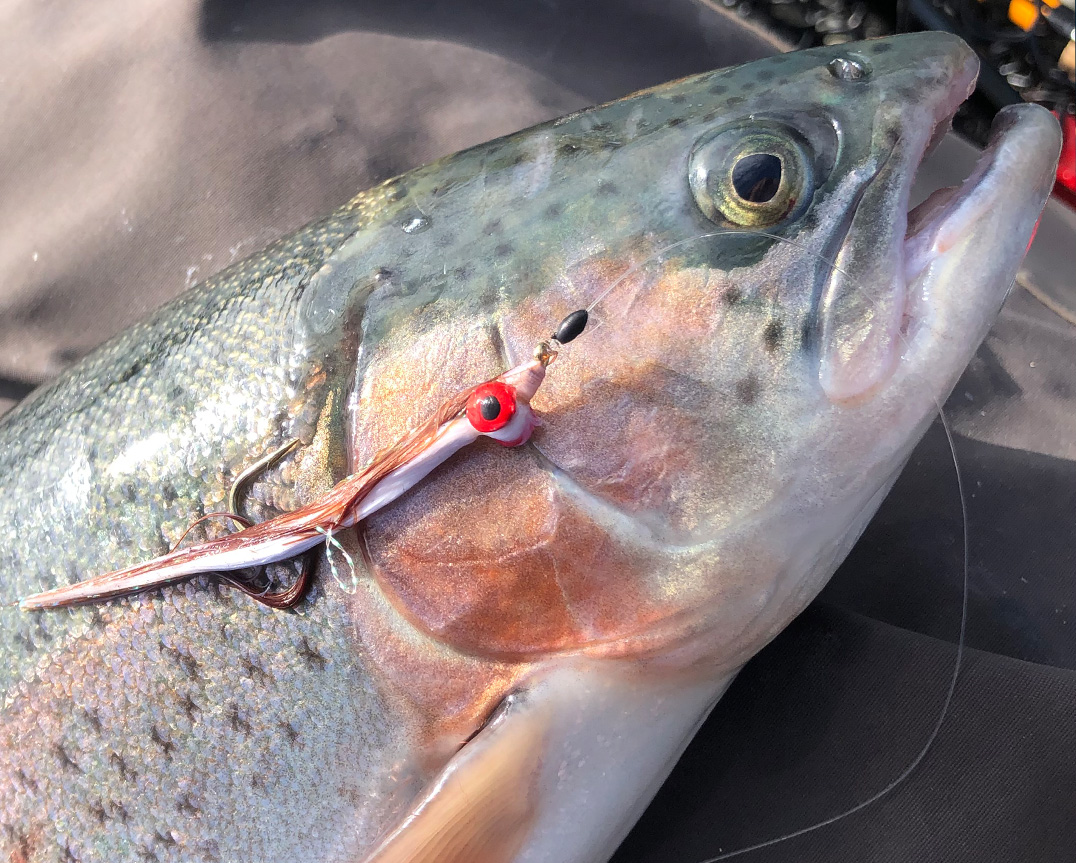
A trolling fly. Cal rates flies above Rapalas and spoons for big fish because they imitate a baitfish and the trout rarely see them. His largest client fish, a 13 pound trout, came on a pink and white Metal Head, and his Trigger fly has an extended hook to limit short strikes.
Cal Kellogg prefers waist waders with a wicking base layer, insulated socks, and a rain jacket sized two to three sizes large so it fits over the PFD. In the cold he drops chemical hand warmers into his waders to keep his feet toasty, because warm hands and feet keep you fishing longer.
No. Cal Kellogg prefers Hobie pedal drives for their durability, fitness, and simplicity, and one set of pedals lasted him four years of heavy use. Electric motors work but require CF registration in California, and mussel quarantines sometimes bar motorized craft while allowing non-motorized kayaks.
It tracks temperature. When the surface is 65 degrees or less, expect rainbows in the top 10 feet. At 70 to 72 degrees they slide to 15 to 20 feet, and at 85 degrees on lakes like Folsom or Shasta they can sit 60 to 70 feet down. Set your depth-control tool to match.
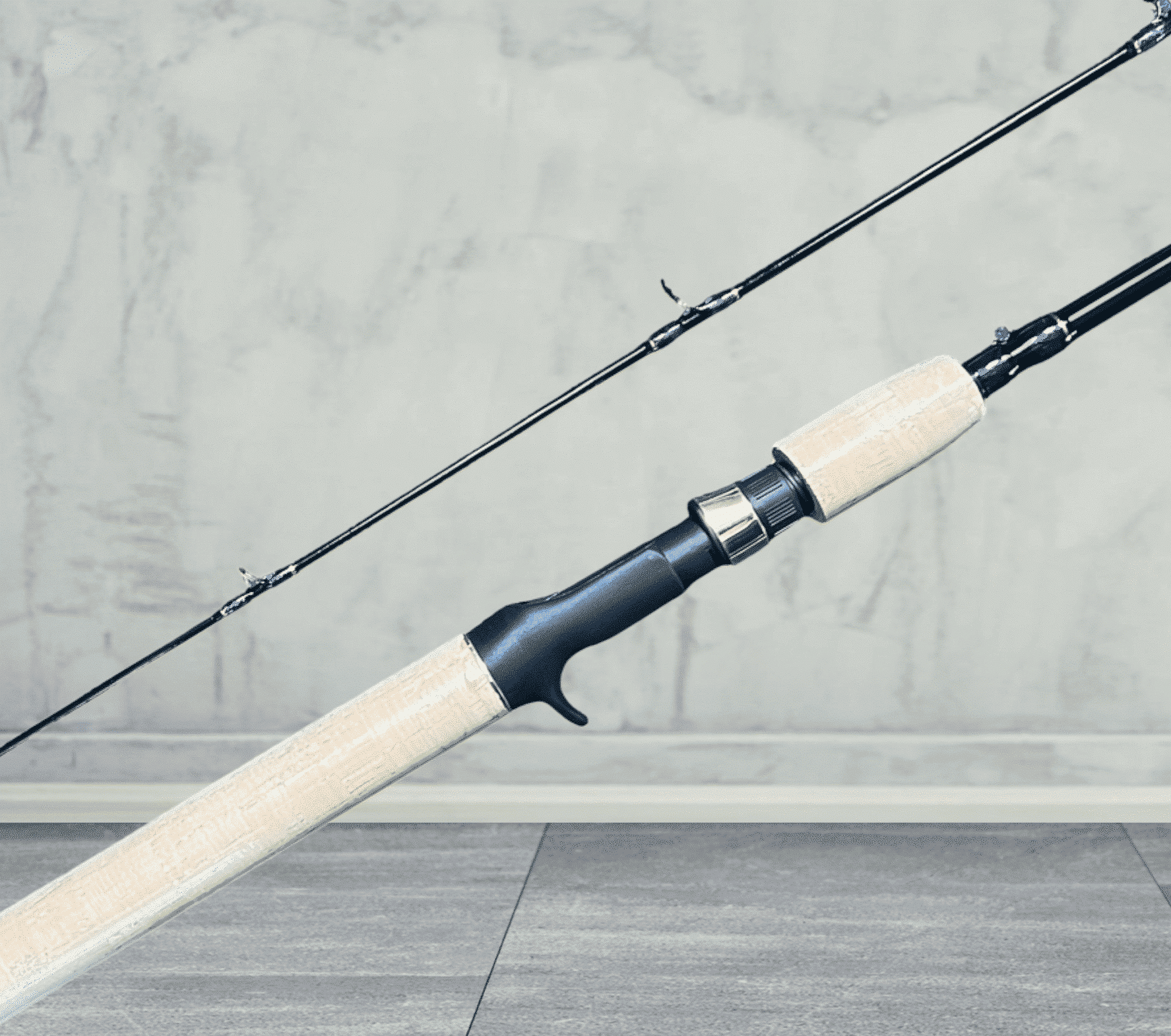
- Cal's Leadcore Trolling Rod
- Trigger Spoon 2.25" - Trout & Landlocked Salmon
- Junior Trigger Spoon 1.25" - Trout & Salmon
- Uncle Larry's Power Spinner - Trout & Kokanee
- Trix Worms 3" - Trout Soft Bait - 5 Pack
- Metal Head Fly - Trophy Trout Trolling Fly - 2 Pack
- Trigger Fly - Trophy Trout Trolling Fly - 2 Pack