
Trolling Speed and Dodger Action: A Complete Guide
How trolling speed changes dodger action for kokanee and trout: the 1.2 to 1.7 mph slow-troll window, when dodgers roll, leader length, and Cannon downrigger cycle mode.
For slow trolling kokanee and trout, run 1.2 to 1.7 mph and read GPS speed off your fish finder. At those speeds a dodger kicks side to side and swims the hoochie behind it. Push past about 1.6 to 1.7 mph and most small dodgers roll into a full 360 rotation, which kokanee dislike but trout and salmon will sometimes hit. Downsize the dodger to feel the fight, and use Cannon downrigger cycle mode to vary speed and depth when the bite goes cold.
What speed should you troll for kokanee and trout?
Slow trolling for kokanee and trout lives in the 1.2 to 1.7 mph range. Read GPS speed off your fish finder, since it is accurate and universal. If a buddy says he was clobbering them at 1.6 mph, you can match that number exactly off your own GPS unit.
How does trolling speed change dodger action?
At slow speed a dodger gives a clean back and forth kick that swims the hoochie behind it. Speed up and both the dodger and hoochie get more action. The closer the hoochie rides to the dodger, the more it moves, so speed and leader length together tune the presentation.
What is dodger rotation and do fish like it?
Push past about 1.6 to 1.7 mph and many dodgers stop kicking side to side and start a full 360 rotation. On a rotation the hoochie gets pulled forward and drops back instead of kicking. Kokanee usually dislike this, but trout and salmon often hit the faster spinning presentation, and it can trigger a reaction bite.
How do you pick a dodger size and style?
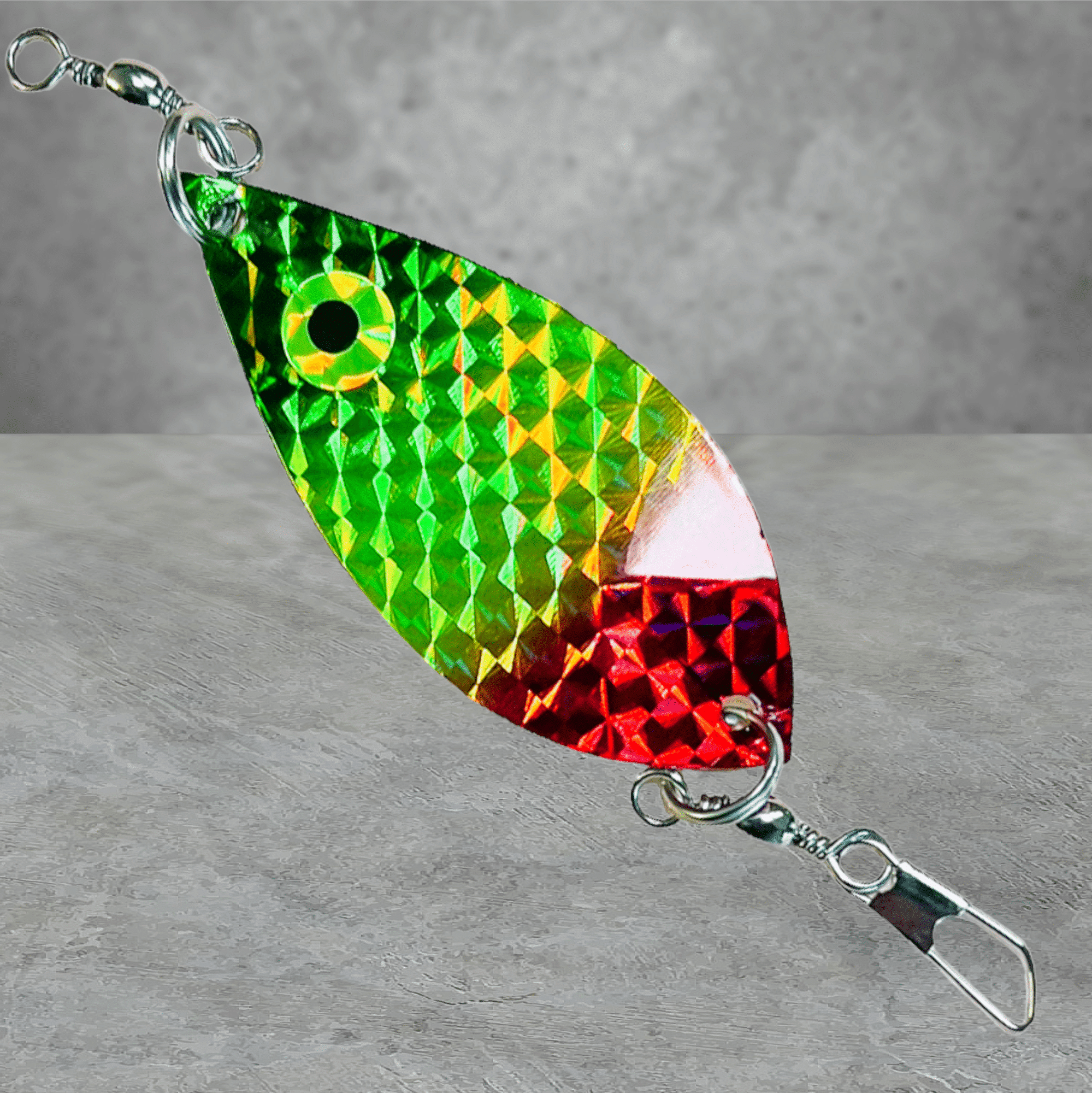
A 4-inch teardrop is low drag, so you feel the fish, and it dodges clean before rolling near 1.6 mph. A wider dish style holds a kick up to 2.3 to 2.4 mph. Skateboard styles throw heavy flash but roll near 1.7 to 1.9 mph. A 6-inch dodger pulls fish from far off with a big kick, but its drag costs you fights. Run the smallest attractor you can to feel the fight.
How far behind the dodger should the lure run?
A plain hoochie with no built-in action runs about 6 to 10 inches behind the dodger, and up to 18 inches for pickier fish. A hoochie with a spinner sets back 12 to 18 inches so the blade can work. Use a quality snap swivel ahead of the dodger so it spins instead of your line, and run tandem hooks for soft-mouth kokanee.
What is Cannon downrigger cycle mode and when do you use it?
Cycle mode sets a top depth and a bottom depth, then moves the gear up and down that water column on an auto cycle from 15 to 60 second increments. As it climbs and drops it slows and speeds your gear, mimicking the speed change of a turn that draws following fish. It shines when the bite is slow and the fish are picky. New Cannons Bluetooth to a phone or a Humminbird finder.
How do you finesse pressured trout?
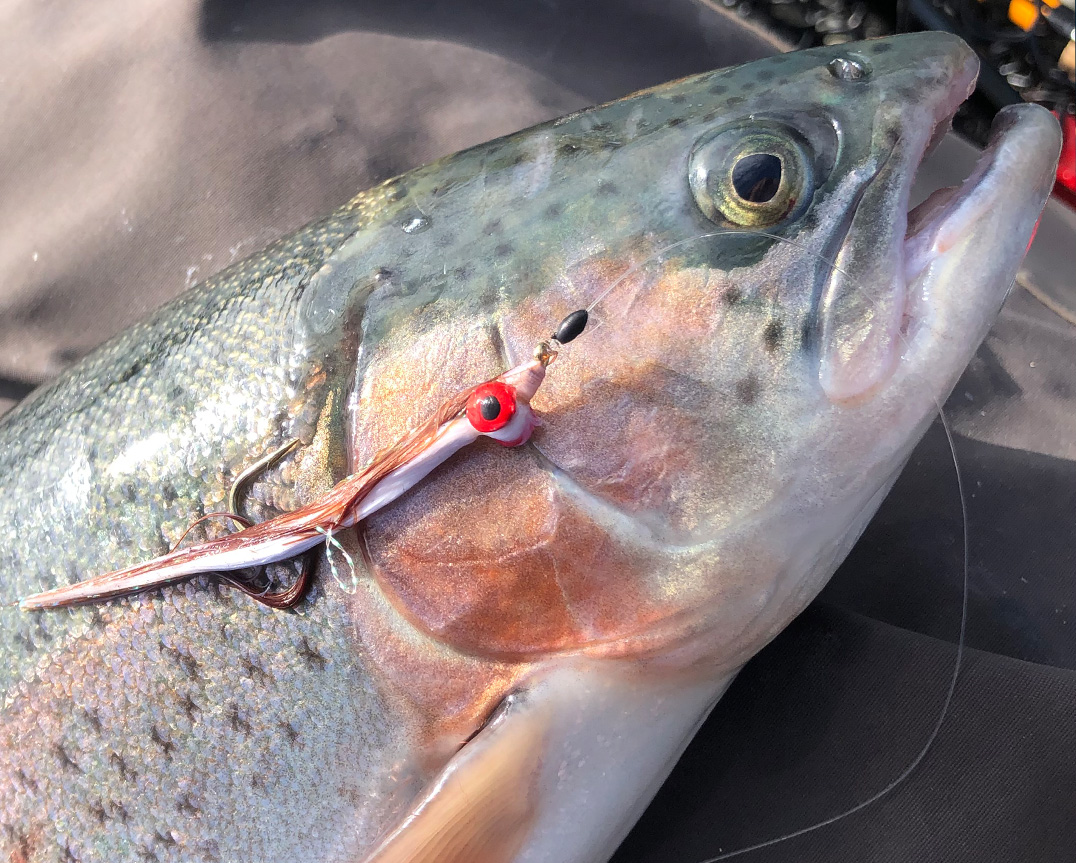
Cal Kellogg runs a standard Trout Trix worm with the Trix Worm hooked right back by the tail for maximum action. He downsizes from a number 4 Mustad to a smaller number 8 Gamakatsu octopus hook to add action for pressured, plankton-feeding fish, then keeps the line tight to land them.
Watch the technique
How trolling speed changes dodger action FAQ
Past about 1.6 to 1.7 mph most small dodgers roll into a 360 rotation instead of kicking side to side. A wider dish-style 4-inch dodger holds a clean kick up to 2.3 to 2.4 mph before it rolls.
Late in the season, when kokanee get lethargic, you can drop all the way down to about 0.9 mph to keep the lure in their face longer. Spring kokanee are more aggressive and take a faster presentation.
Closer to the dodger gives the hoochie more action, farther back gives it less. A plain hoochie with no action of its own runs about 6 to 10 inches back as a general rule.
A dodger can roll and spin, and that twist runs up your line. A quality snap swivel ahead of the dodger takes the spin so your line does not, which keeps your presentation clean.
Run tandem hooks, two hooks, for kokanee, since their soft mouths tear out and the second hook catches the fish. A single hook is fine for trout.
Yes. A spinner such as an Uncle Larry's sets back about 12 to 18 inches so the blade gives flash and vibration. Tie it just outside the dodge for a consistent, vibrating presentation.
He switched from a number 4 Mustad to a smaller, lighter number 8 Gamakatsu octopus hook to add action to the worm for skittish, pressured fish.
Cannon cycle mode runs on increments from 15 seconds up to 60 seconds. You set the top and bottom depth and it works the water column automatically without you touching it.