
Trout Lure Color Selection by Light & Water Clarity
How to choose trout lure color by light level and water clarity, from dark low light lures to bright forage matches.
Pick trout lure color by light level first. In low light, overcast, dawn, or dusk, run a dark lure like a black fly that throws a strong silhouette. In bright, high sky conditions switch to white or light colors. In stained water go aggressive with gold, gold-orange, and red. Then match forage: natural Trix Minnows when fish eat bait, bright orange and pink when they feed on bugs.
What color trout lure should I use in overcast conditions?
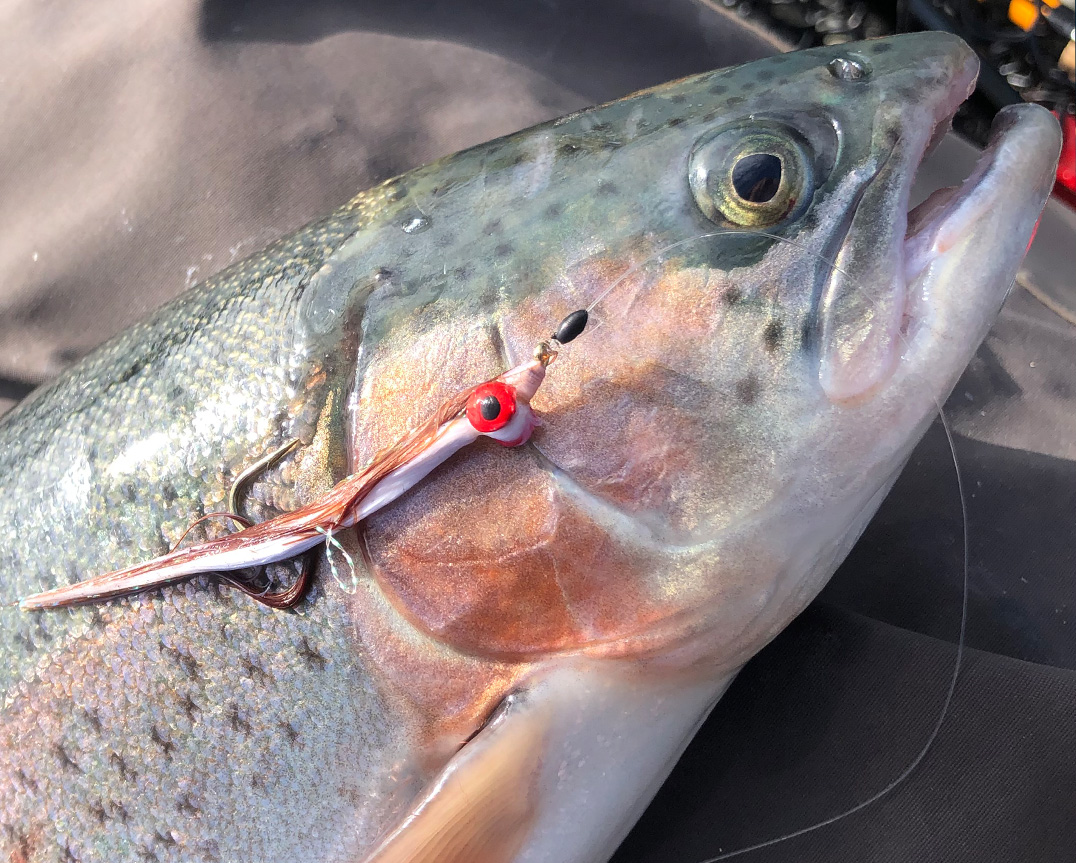
Go dark. In overcast and low light a black or dark lure throws a strong silhouette that trout key on. Cal Kellogg reaches for a black fly and often out fishes everything else with it. Dark blue and dark green work too. He proved it by popping big fish on a black fly within ten minutes of tying it on.
When should I switch to a white or light colored lure?
When the sun hits the water. On a bright high sky day a light colored lure shines. Cal Kellogg switched from a black fly to a white one after lunch on a blue sky day and landed a 10 pound rainbow on a small number 8 white fly. High light means light colors, low light means dark colors.
What color works best in stained or muddy water?
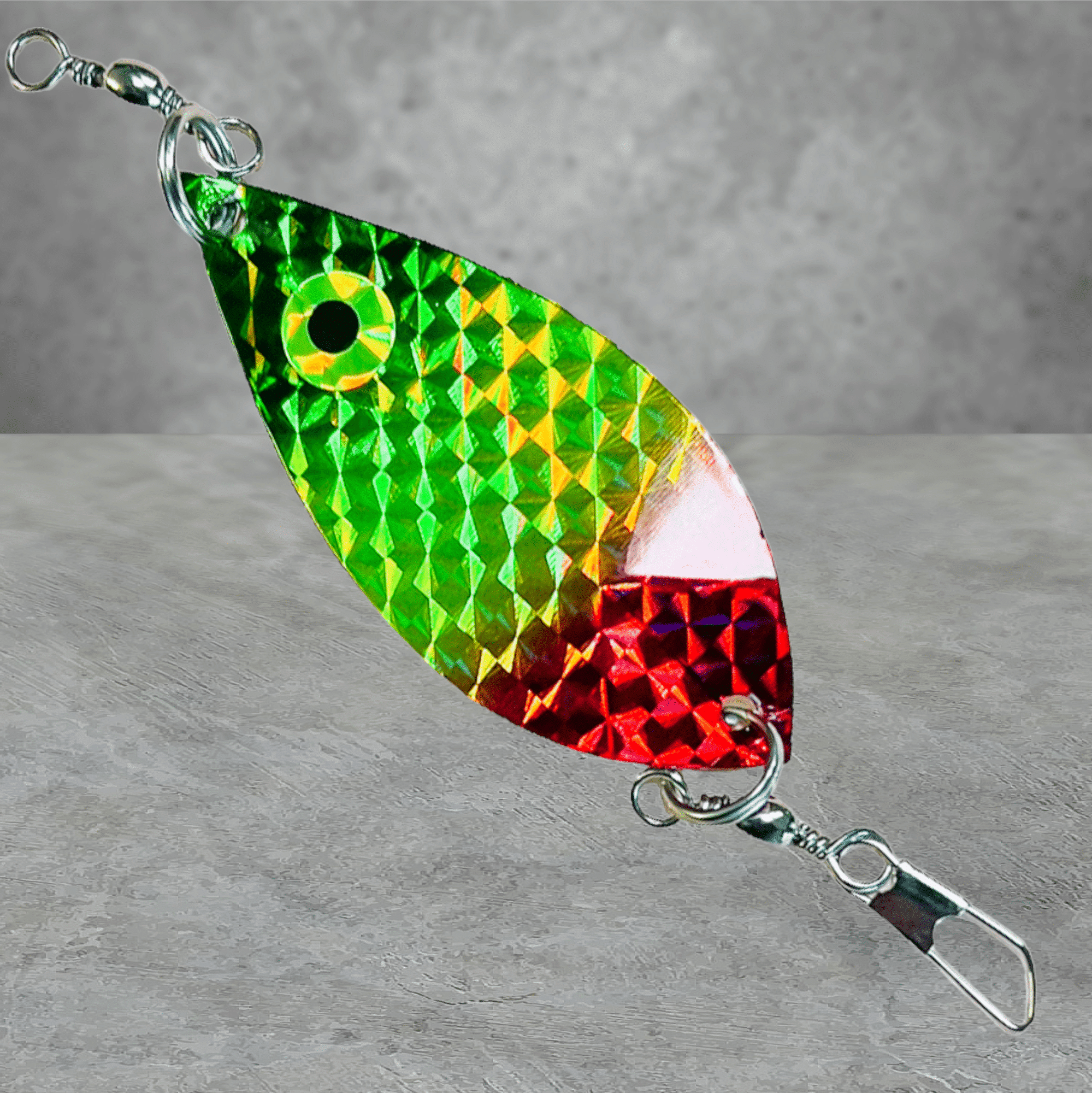
Gold, and lots of it. In stained water Cal Kellogg runs gold, gold-orange, and gold-red lures with a big, water pushing profile. He caught a 3 pound Collins Lake rainbow on a gold and orange plug at 2.4 mph. Stained water rewards aggressive, high visibility gold over subtle finesse colors.
How do I match lure color to forage?
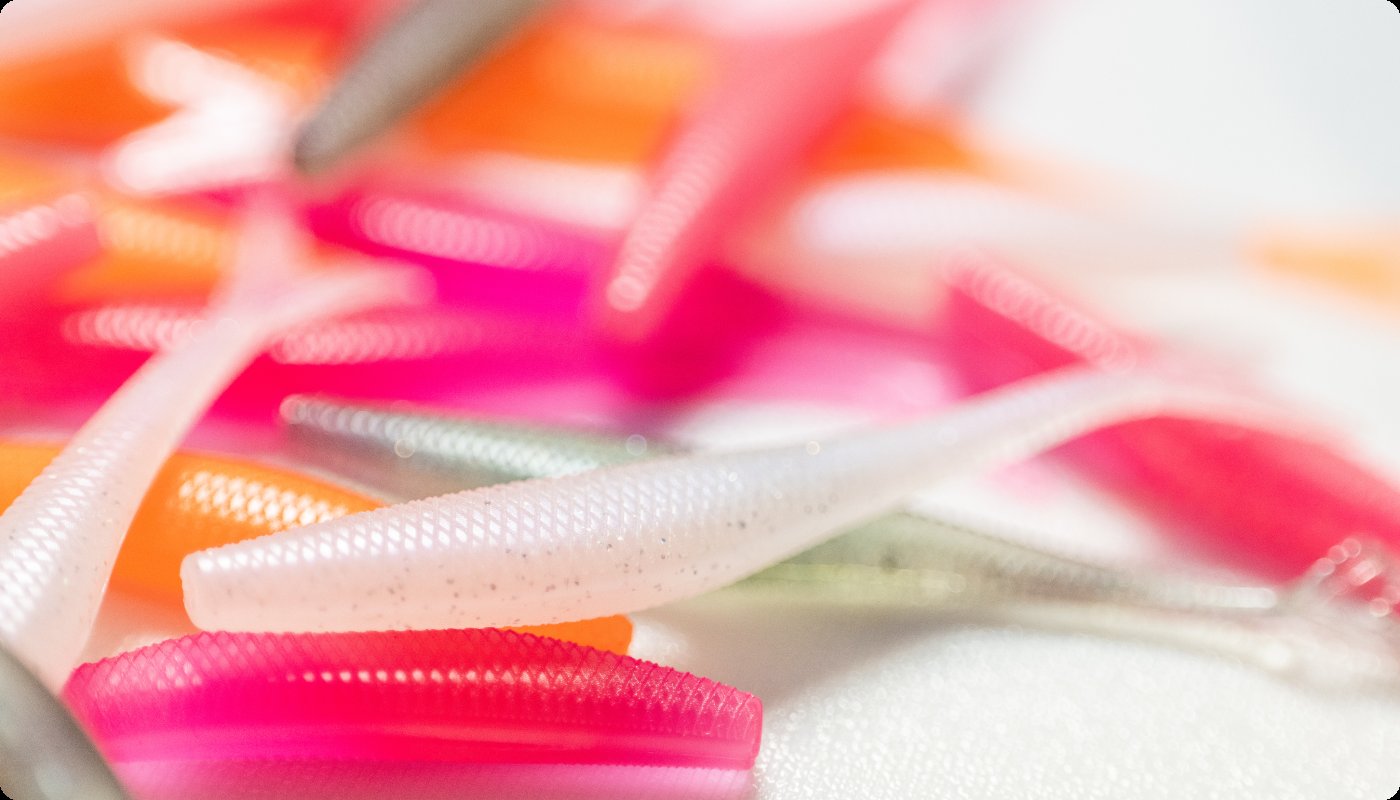
Learn what the trout are eating. Where fish feed on pond smelt or shad, run natural, metallic, and baitfish patterns like a natural Trix Minnow. Where insects are the main forage, usually higher elevation lakes, go bright with orange, pink, fire tiger, and chartreuse to trigger curiosity.
Does the black lure bite last all day?
Usually not on sunny days. Cal Kellogg often gets his black fly bite in the first hour, then it fades once the sun is on the water. On an overcast day the black lure can produce all day long. Keep at least one dark offering in your spread anytime the light is low.
Why do frog pattern lures work in low light?
Because they are dark. Cal Kellogg points out that a frog pattern is often the darkest lure in the box, which is exactly why it earns its reputation in overcast conditions. Low light plus a dark silhouette equals bites, whether that dark lure is a fly, a spoon, or a plug.
Should I run one color or mix a spread?
Mix to let the fish vote. Cal Kellogg runs a mixed menu when he is unsure, like a natural pattern on the downrigger and a bright pink on the leadcore. Whatever produces tells you what the trout want that day. Always fish colors you have confidence in, because you fish them harder.
Watch the technique
Trout lure color selection by light level and water clarity FAQ
Black, dark blue, and dark green, or combinations of them. Cal Kellogg leans on a black fly at dawn, dusk, and under overcast because it silhouettes against the sky. He caught a month long streak of trout over 6 pounds, topping out near 9, on black flies during the first hour of trips.
Yes. Cal Kellogg landed a 10 pound rainbow on a number 8 junior white fly after the sky brightened. Do not assume big fish need big lures. When light is high, a small white or light colored offering can be exactly what a trophy trout wants.
Clarity shifts you toward visibility. In stained water Cal Kellogg goes gold, gold-orange, and gold-red with a bold profile so fish find the lure. Once water has been stained a while, fish adjust and can find your bait, so the bigger challenge is often temperature swings, not the color itself.
Baitfish, mostly. Cal Kellogg notes lower elevation lakes hold pond smelt, threadfin shad, and other bait, so natural and metallic patterns produce. He confirmed it by cleaning kept fish and finding minnows in their bellies, which had them eating natural colored Trix worms and Trix minnows.
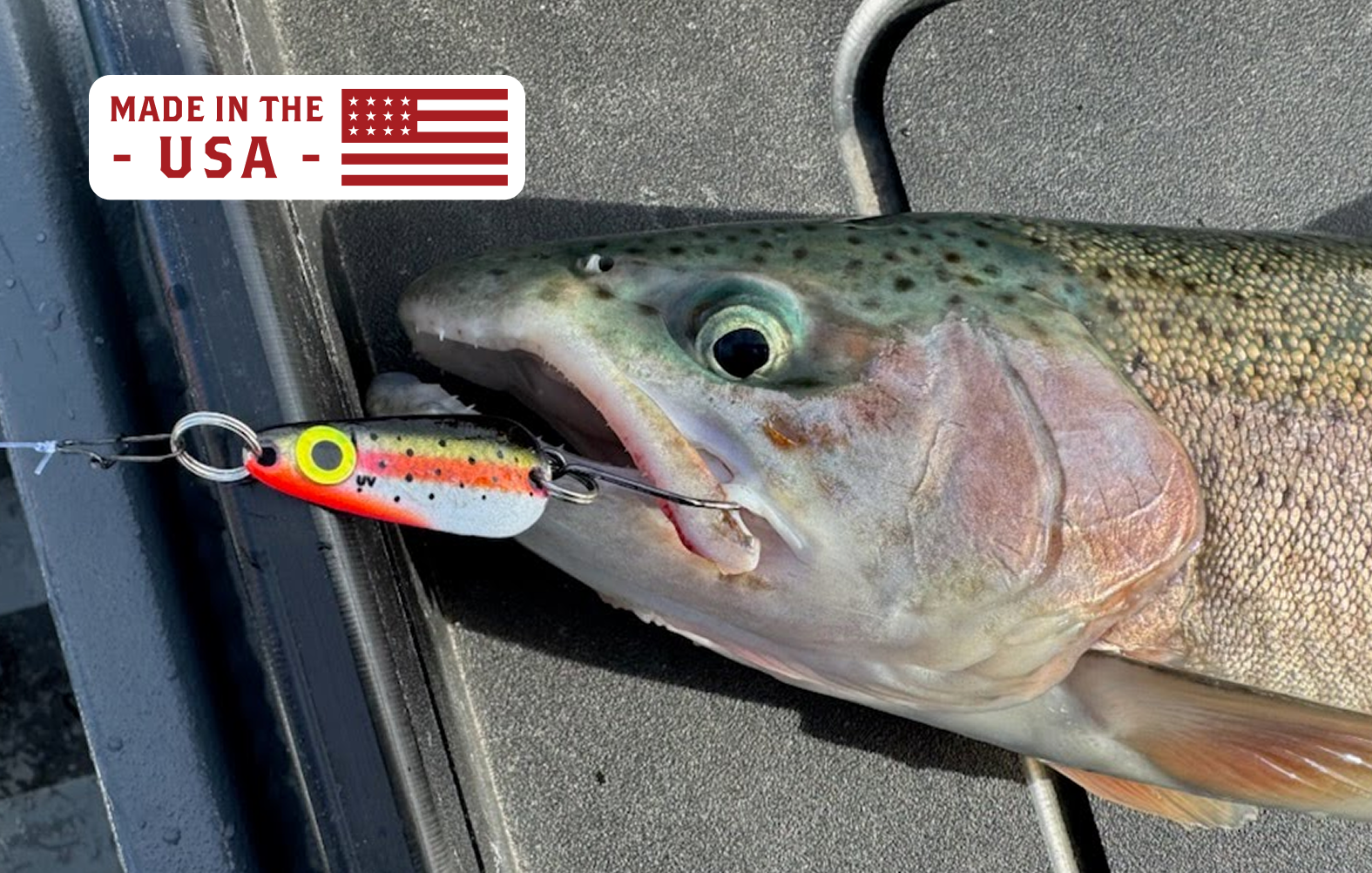
Real metal gives off flash and luster that painted finishes cannot. Cal Kellogg plates his spoons and dodgers in genuine 24 karat gold, real copper, and real silver under clear coat. That authentic flash mimics a live baitfish better than brass, which is why he eats the extra cost.
Dark for dark, light for light. When the light level is low, run a dark lure. When the light level is high, run a light lure. Layer forage matching on top, natural for baitfish lakes and bright for insect lakes, and you have a color system that travels to any trout water.