
Water Temperature & Weather: Where Trout Hold
How water temperature for trout and weather fronts set where trout hold and how they bite.
Rainbow trout are most comfortable around 56 degrees and active from the high 40s up to about 65. When the surface stays under 65, expect trout near the top and troll the upper 10 feet. Above 65, they drop deep seeking cool water. Always present your bait 5 to 10 feet above the biomass, since the highest fish feed best. A falling temperature or a retreating front makes trout lethargic, so slow down, downsize, and lean on scent with a Trix Worm.
What water temperature is best for trout?
Rainbow trout love water right around 56 degrees, which Cal Kellogg calls their prime temperature. They stay active from the high 40s up to about 65 degrees. Below 48 they turn lethargic, and once the surface holds consistently above 65 they drop down seeking cooler water.
Where do trout hold based on surface temperature?
When the surface is 65 degrees or less, count on rainbows near the top at some point each day, especially in low light or chop. Once it climbs past 65 they slide down the water column, often 40 to 60 feet deep in an 84 degree surface lake, over the deep, cool areas.
How high in the water column should I fish?
Above the fish. Trout are stream fish by nature and feed up, so present your bait 5 to 10 feet above the marks. The most active trout always sit at the top of the biomass. If you mark fish at 80 feet, run your gear around 70 to 75 feet.
How do I find the right depth by temperature?
Captain Monte Smith clips a temperature probe to his downrigger ball, lowers it to 100 feet, then reels up taking a reading every 5 feet and photographing the numbers. That builds a temperature-by-depth profile so he can put his gear in the sweet spot where fish should hold.
Why does a temperature drop kill the bite?
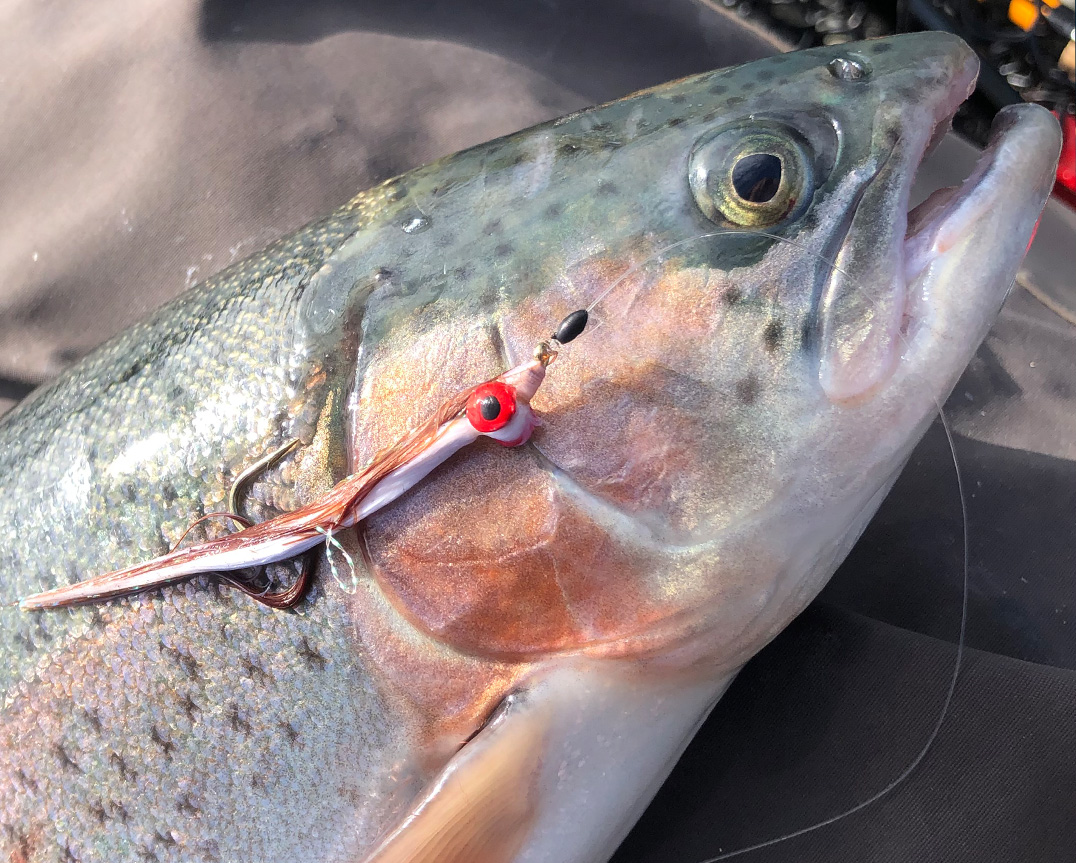
Even inside their comfort zone, trout dislike a falling temperature. A 2 degree overnight drop can turn fish lethargic. Cal counters it by slowing down, downsizing to a small-profile bait with lots of erratic action, adding scent, and grinding hard on any area that shows a feeding fish.
Does chop and wind help the trout bite?
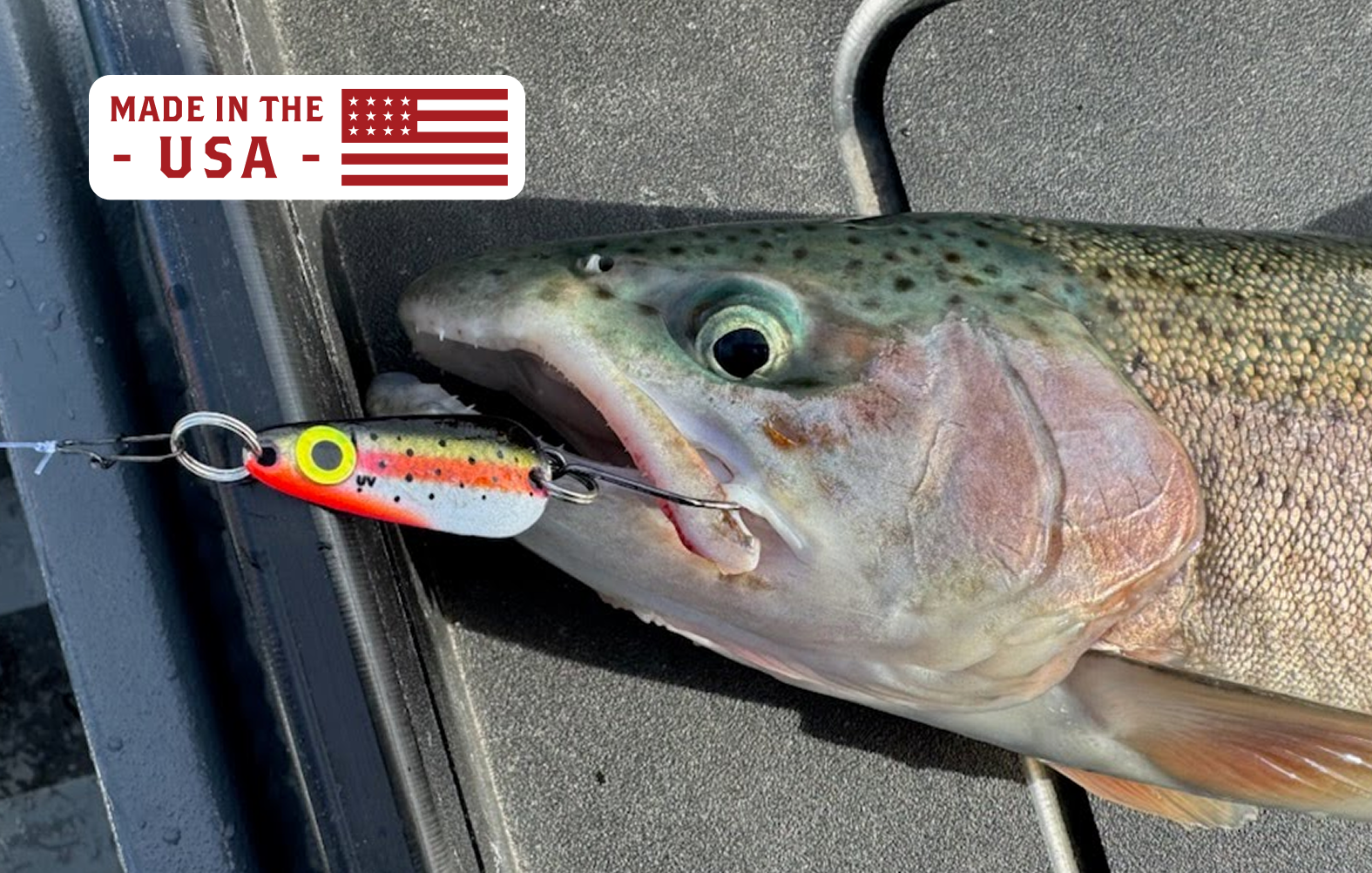
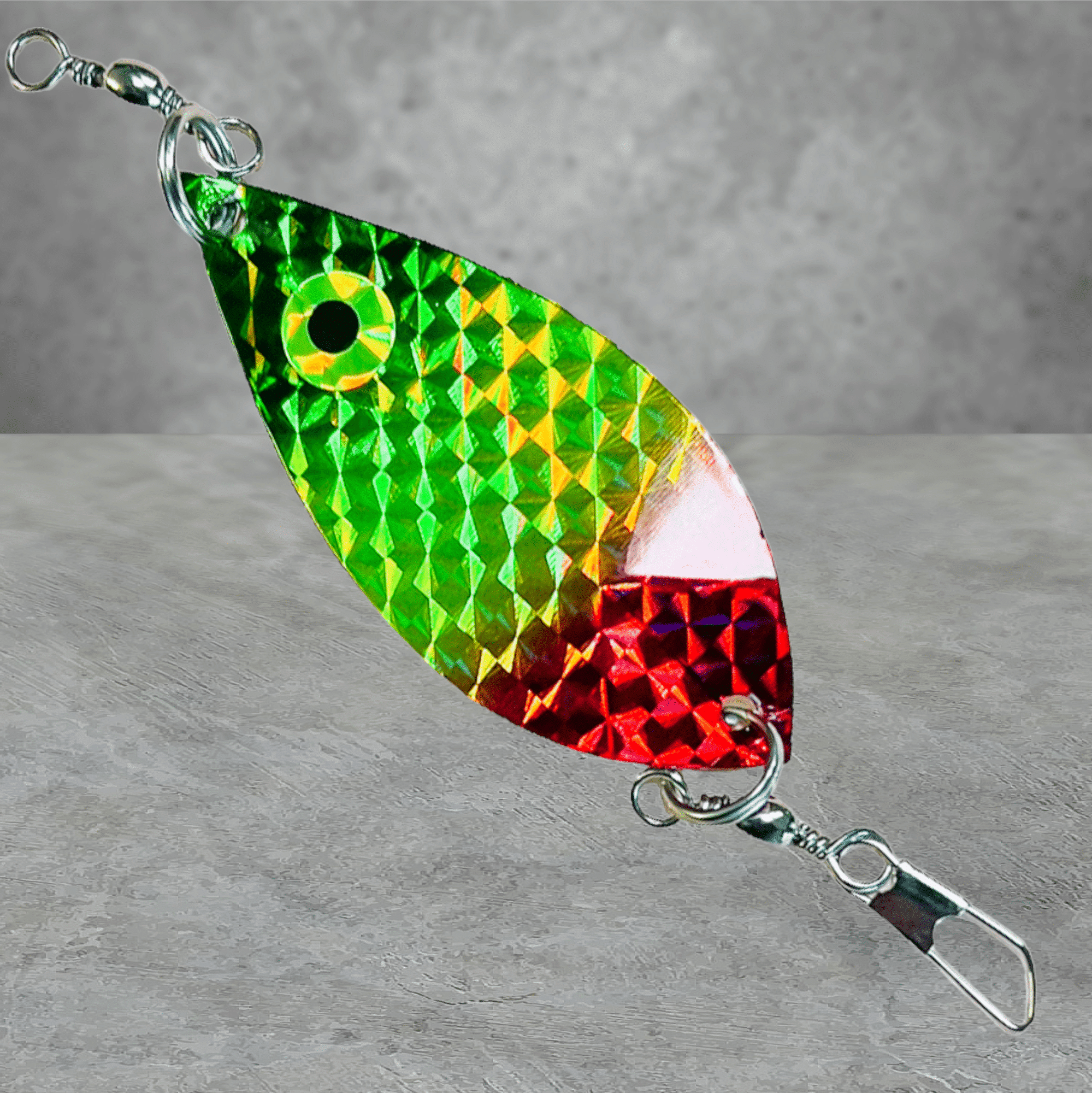
Yes, when the water is 65 or cooler. What we see as surface chop, trout see as current. They orient in it, feel safe under the broken surface, and shift from prey to predator. Run your lures in the top 10 feet and troll fairly aggressively when white caps are up.
How do fronts change trout behavior?
An approaching front turns trout aggressive, since they instinctively feed before the weather shuts them down. A retreating front brings a north wind and rising barometer that makes them lethargic and locked-jawed. Fish the leading edge of a front for the best action.
What do I fish after a front pushes through?
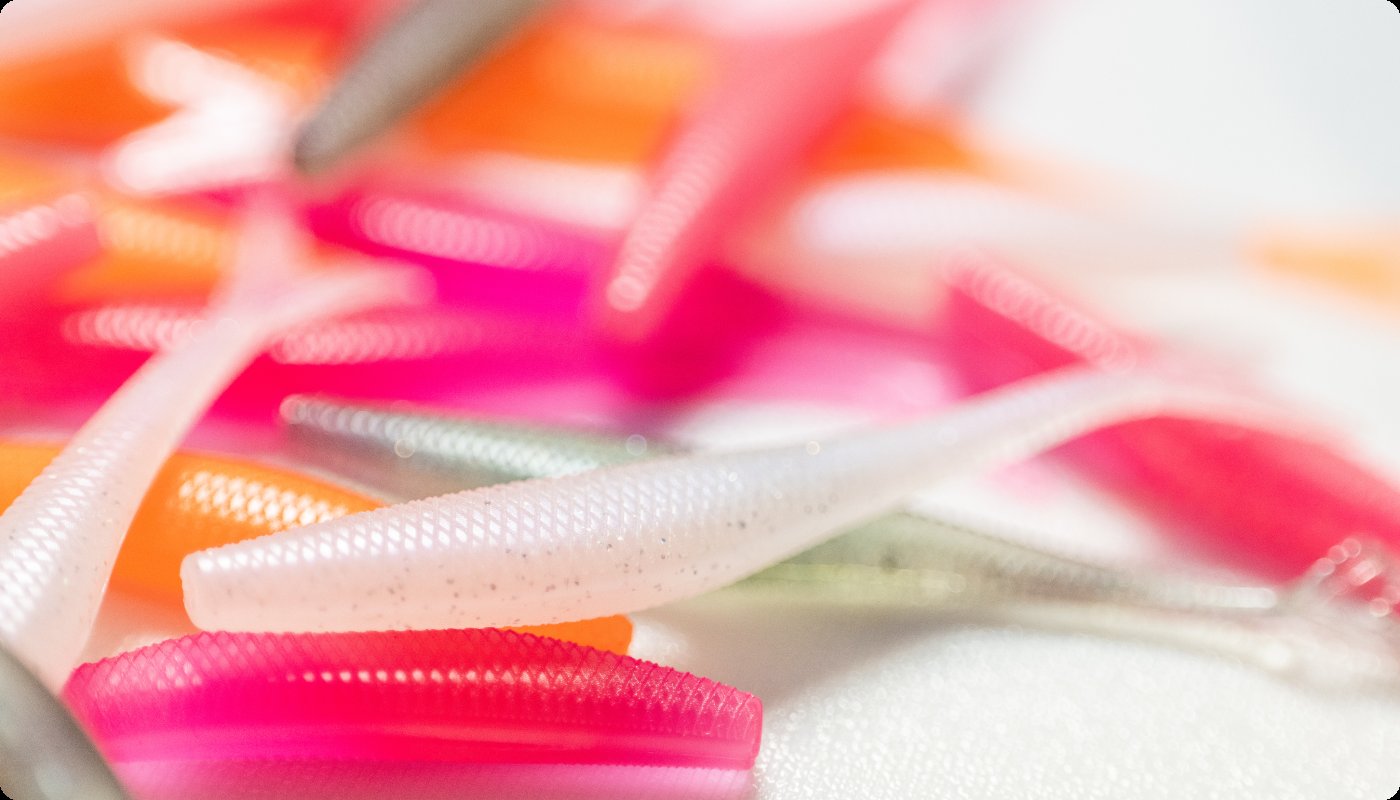
Small soft plastics with scent. On post-front north-wind days Cal goes almost entirely to a Trix Worm and Trix Minnow at 1.8 mph, dropping to 1.5 into the wind. The slim, erratic profile stays in the strike zone and tempts fish that will not chase.
Watch the technique
Water temperature and where trout hold FAQ
Once the surface temperature holds consistently above 65 degrees, trout start dropping down the water column looking for cooler water. In a lake with an 84 degree surface, expect them 40 to 60 feet deep over the deepest, coolest parts of the lake.
They slow down but keep biting. Below about 48 degrees rainbows get lethargic, and it becomes a finesse game. Slow your troll, add nightcrawlers or soft plastics, and use scent. Only when water drops below 40 does it get truly hard.
Trout read chop as current and feel protected under the broken surface, so they move up and feed confidently. That is why a windy day with white caps often produces a strong bite when the water is 65 degrees or cooler.
Usually yes. On the leading edge of a front, trout feed aggressively because they sense they may not feed once the storm hits. Cal has taken limits in the rain as a front arrived, with 25 to 30 hookups in a day.
The old saying is the north wind blows the bait out of a fish's mouth. A retreating front brings north wind and rising pressure, leaving trout lethargic and off the bite. Slow down, downsize, and use plenty of scent to salvage a tough day.
At lakes where fish feed on bait, catch a lot of fish. Only a small percentage of the population is trophy-size, so the more fish you put on the line, the better your odds of hooking one of the giants.
Around 1.8 mph, dropping to 1.5 when trolling into the wind. That keeps a small, high-action soft plastic in the strike zone long enough for a neutral fish to commit, which is exactly what a temperature drop or post-front bite calls for.