
How to Fish a Dodger for Trolling (Tuning & Colors)
How to use a dodger for trout: leader length by bait type, stopping line twist, the best dodger colors, and matching blade size to the water.
A dodger is a slow-troll calling card. Its flash and vibration pull trout into range, then they spot your bait. Match the leader to the bait: a bait that already rotates, like a worm or grub on a slow death hook, runs 30 to 40 inches back, while a dead bait like a hoochie or a fly with no disc rides just two to three dodger lengths behind the blade for a stop-and-dart action. Start with a watermelon or chrome CA dodger and troll slow, near 1.8 to 2 mph.
What does a dodger do when trolling for trout?
A dodger is your calling card. It puts off flash and vibration that draw trout in from a distance, making them think another fish is feeding. When they move in close, they spot your worm, grub, hoochie, or fly and grab it. The dodger is an attractor, not the bait, so its job is to get fish looking at your offering.
How long should the leader be behind a dodger?
It depends on whether the bait has its own action. A bait that already wobbles or rotates runs 24 to 36 inches back, with the dodger just calling fish in. A bait with no action of its own rides two to three dodger lengths behind the blade so the dodger drives it. Use stiff 10 lb fluorocarbon to transfer that action.
How do you rig a worm or grub behind a dodger?
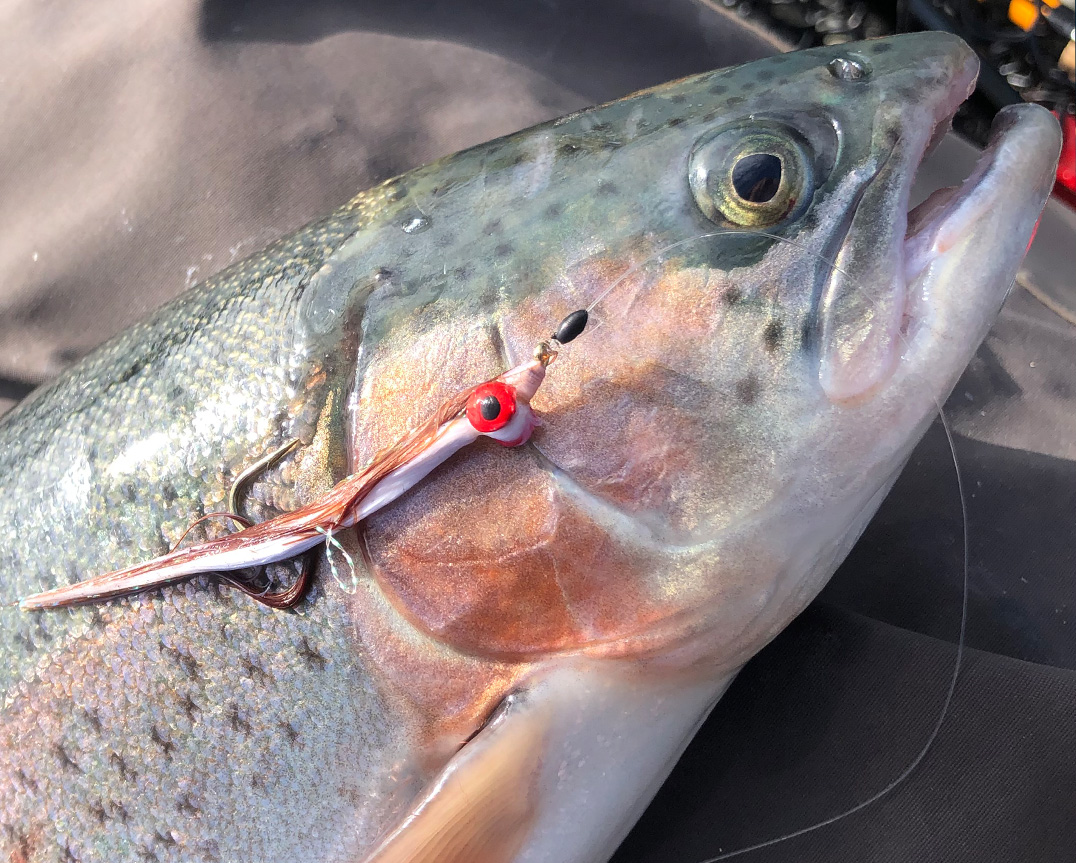
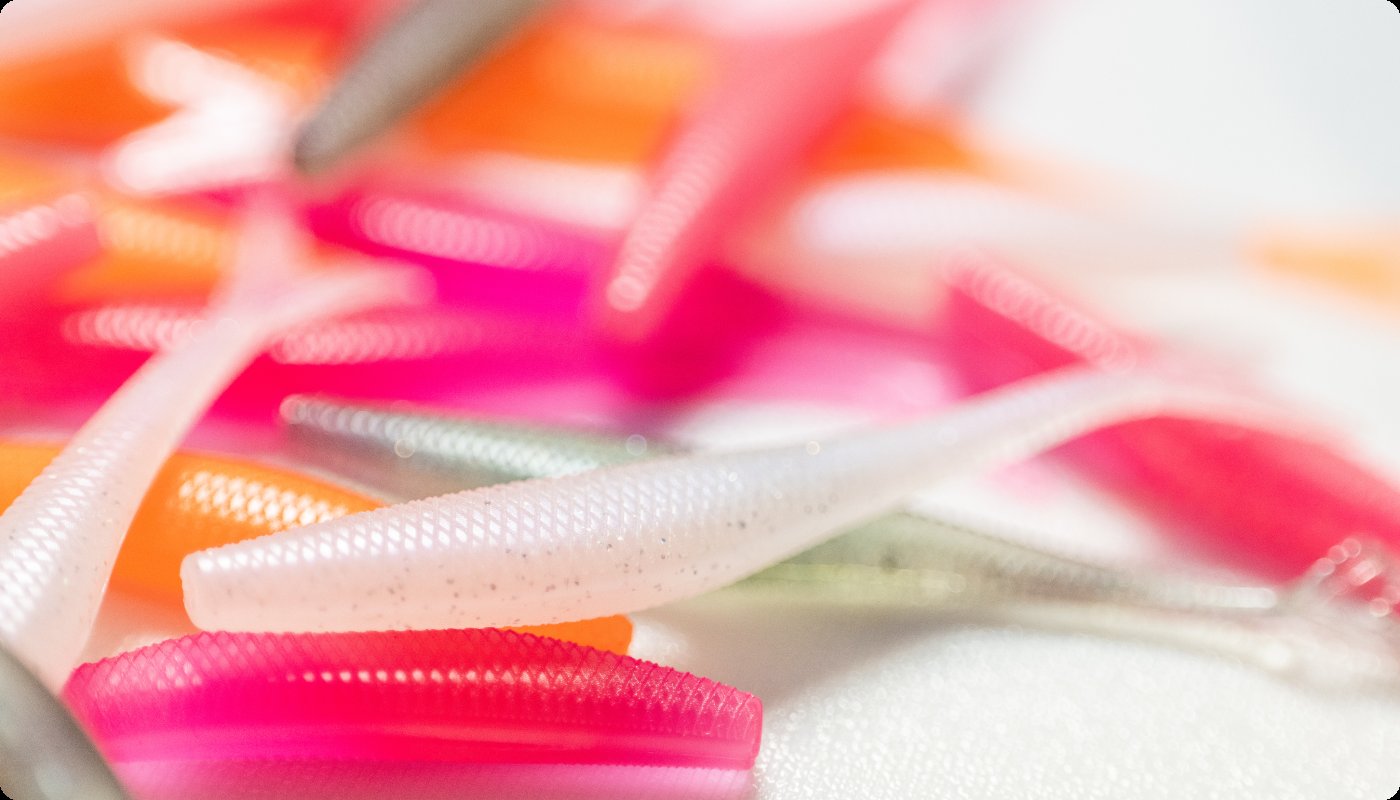
Skip the action disc. A Trix Worm or Trix Grub on a slow death hook rotates on its own, so run it 30 to 40 inches behind the blade. The dodger's flash calls fish in and the bait's rotation lets them zero in. A truly dead bait like a plain hoochie rides two to three dodger lengths back for a stop-and-dart action.
How do you stop line twist behind a dodger?
When a bait does not rotate hard enough to spin the swivel on the back of the dodger, the leader kinks and twists up. Cal's fix is simple: snap a separate trolling swivel onto the back snap of the dodger, then attach your 30 to 40 inch leader to that. A barrel swivel there eliminates the twist completely.
What are the best dodger colors for trout?
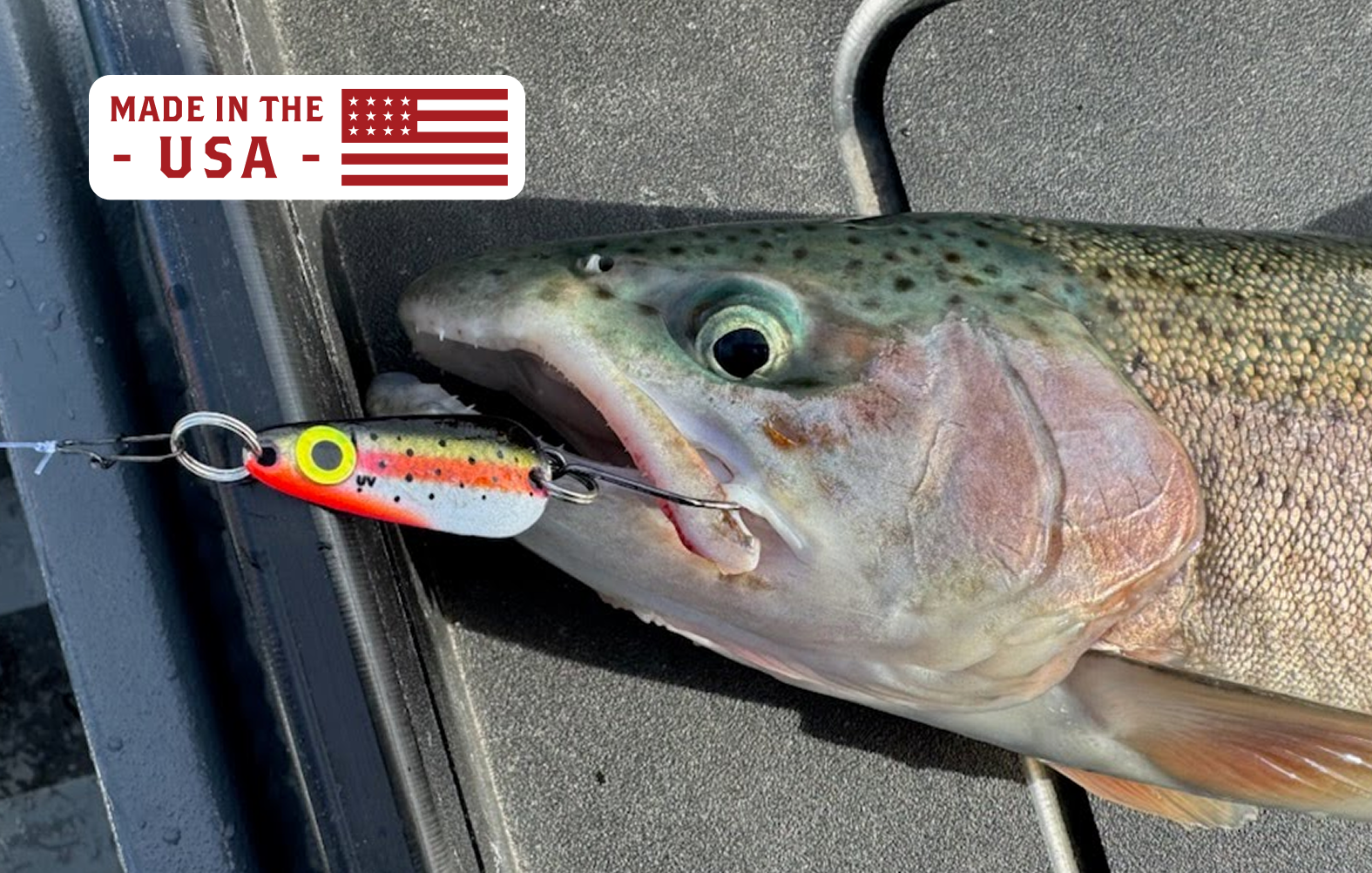
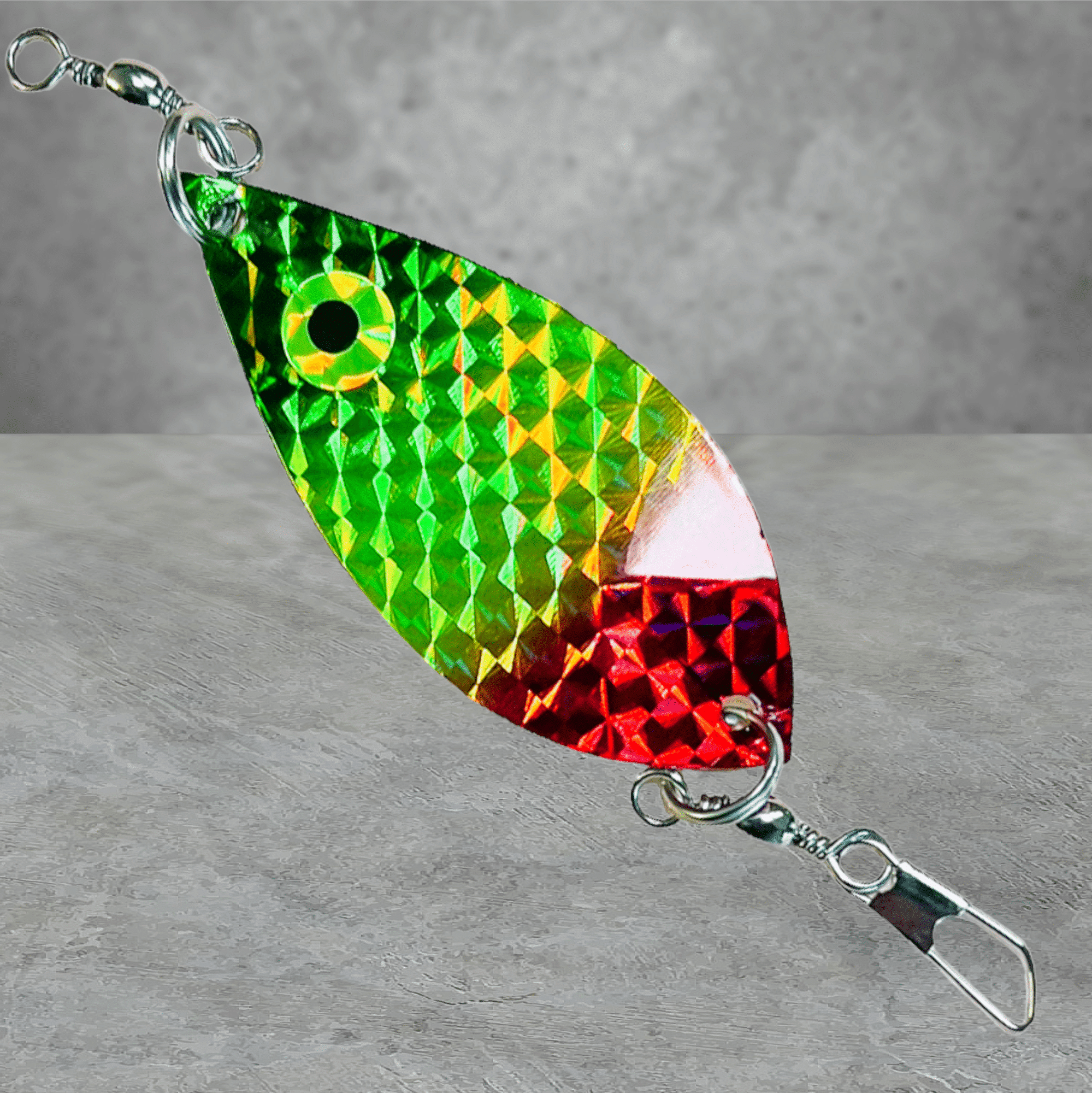
For rainbows, size, flash, and vibration matter more than color, so Cal keeps it simple. His four go-to finishes are chrome, chrome and gold, rainbow, and watermelon, and those account for over 90 percent of his trout. If he had to pick one color across the board, it would be watermelon. In stained water he leans on gold-on-silver or watermelon-on-silver.
What size dodger should I use for trout?
Match blade size to the water. A 4 inch dodger like the CA Trolling Dodger 4 inch works in shallow, smaller water where you do not want to overwhelm fish. Step up to a 6 inch blade for deep water at lakes like Shasta and Folsom, and an 8 inch blade for big open expanses. More blade means more flash and vibration.
How deep and how fast do you troll a dodger?
Cal often runs dodger-and-bait combos 4 to 6 feet deep on hybrid leadcore, and drops to a 6 inch blade on a downrigger for deeper fish. Because a dodger imparts action to the bait, your speed is dictated by the blade, typically 1.8 to 2 mph. Troll slow and steady so the dodger kicks cleanly and drives the offering.
Watch the technique
Fishing a dodger for trout trolling FAQ
It matters, but it is Cal's fourth consideration behind size, flash, and vibration. He does not carry the big color spread he would for kokanee. Chrome, chrome and gold, rainbow, and watermelon cover the vast majority of his rainbow trout.
Watermelon. If Cal could pick only one dodger color for trout across all conditions, it would be the watermelon blade. A simple silver-on-silver dodger with a bait behind it is also hard to beat.
Only when the bait has no action of its own, like a hoochie or a fly with no action disc. Then you want it two to three dodger lengths behind the blade so the dodger imparts the stop-and-dart movement. A bait that wobbles on its own gets a longer 24 to 36 inch leader.
The bait is not rotating hard enough to spin the dodger's rear swivel, so the whole leader kinks up. Add a trolling swivel to the back snap of the dodger and tie your leader to that. Cal trolled hours in stained water with this fix and did not get a single twisted leader.
Cal favors gold-on-silver or watermelon-on-silver in stained conditions, and a rainbow blade also produces. He runs a slightly larger 4 inch blade for extra flash and vibration when the water is dirty, teamed with a rotating grub or threaded worm.
For a no-action bait you want fairly stiff line, such as 10 lb fluorocarbon, so the dodger's kick transfers straight to the bait. Softer, lighter line absorbs the action and mutes the stop-and-dart movement that triggers strikes.