
How to Rig & Troll Worms/Nightcrawlers for Trout
How to troll worms for trout: threading a nightcrawler, worm-spinner and harness rigs, plus leader, speed, and depth from guide Cal Kellogg.
Thread a nightcrawler for trout trolling by breaking off the firmer head end, running a worm threader up through the center and out the tip, then sliding the worm down the hook so nothing hangs past the point. Troll slow, 1.5 to 2.2 mph, on an 8 to 10 lb fluorocarbon leader. Add flash with an Uncle Larry's Pro Snell spinner or rig a Trix Worm on a Trigger Disc for erratic action. Slather on scent and play out light bites.
How do you thread a worm for trout trolling?
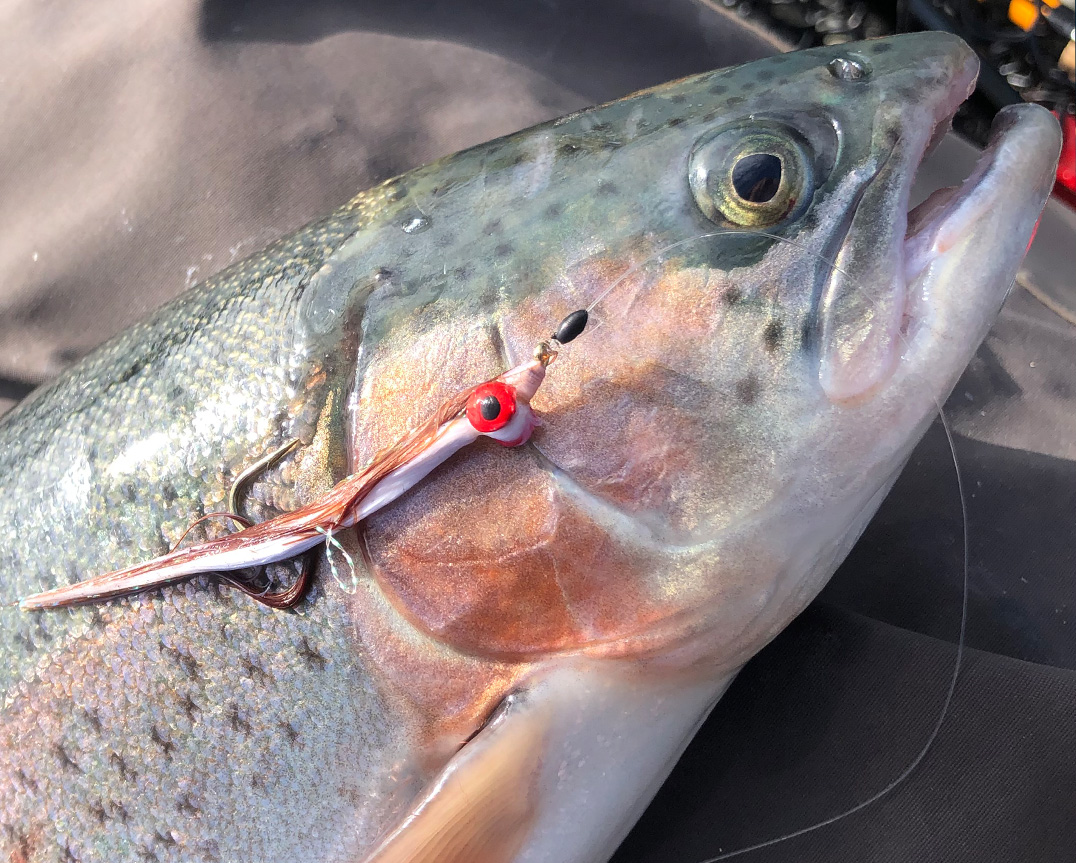
Break a full-size nightcrawler in half and keep the head end, since that firmer, more muscular end holds up best. Insert a worm threader into the break, push it up through the center and out the tip, then set the hook point into the hollow threader and slide the worm over the hook and up the leader. Leave nothing hanging past the hook, so tentative trout cannot grab a tail with no hook in it.
What speed should I troll a worm for trout?
Troll a threaded worm slow, 1.5 to 2.2 mph, with Cal Kellogg dialing 1.8 to 2.2 most days. A spinner-and-worm combo works across a broad speed range, so a nightcrawler on an Uncle Larry's Pro Snell stays effective even when you slow to 1.3 mph to work lethargic fish after a weather front.
How do you rig a Trix worm on an action disc?
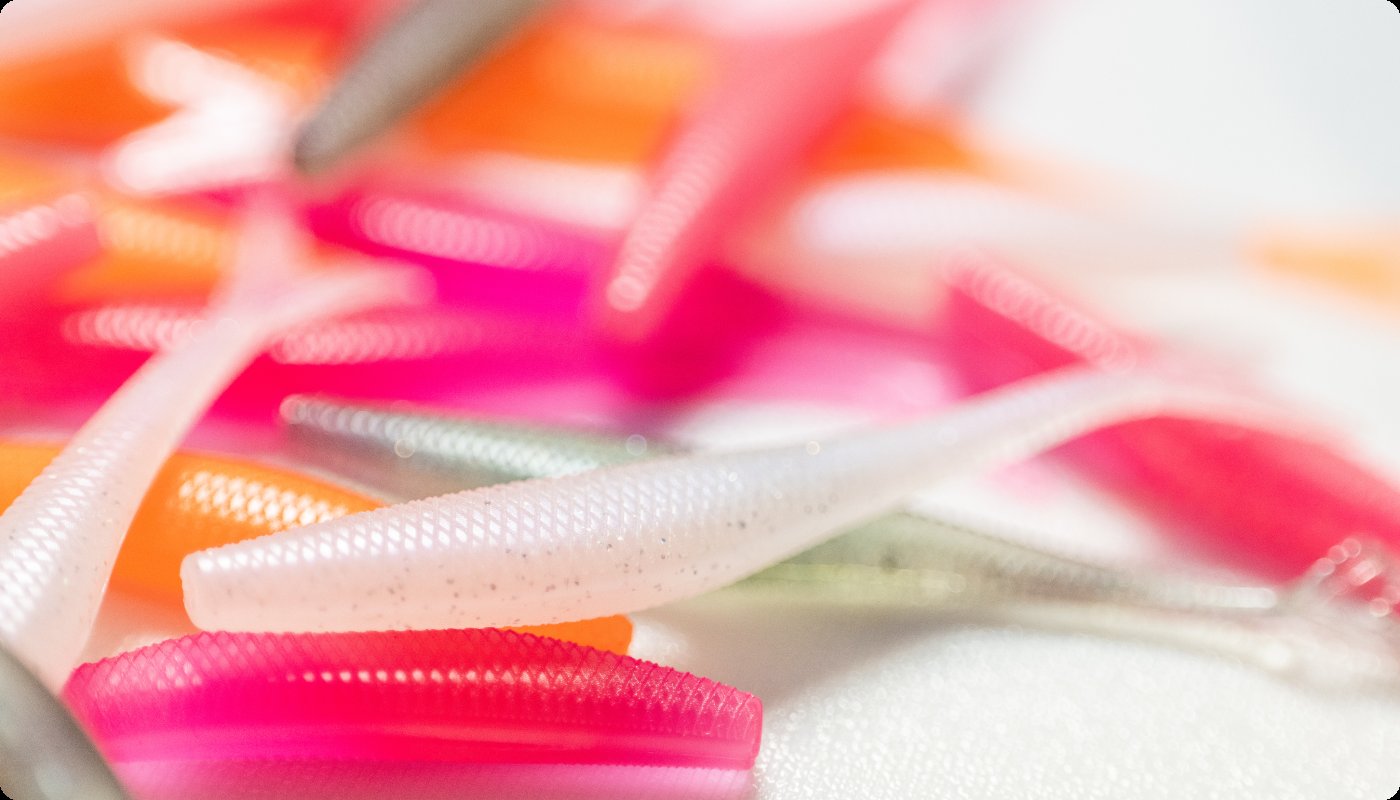
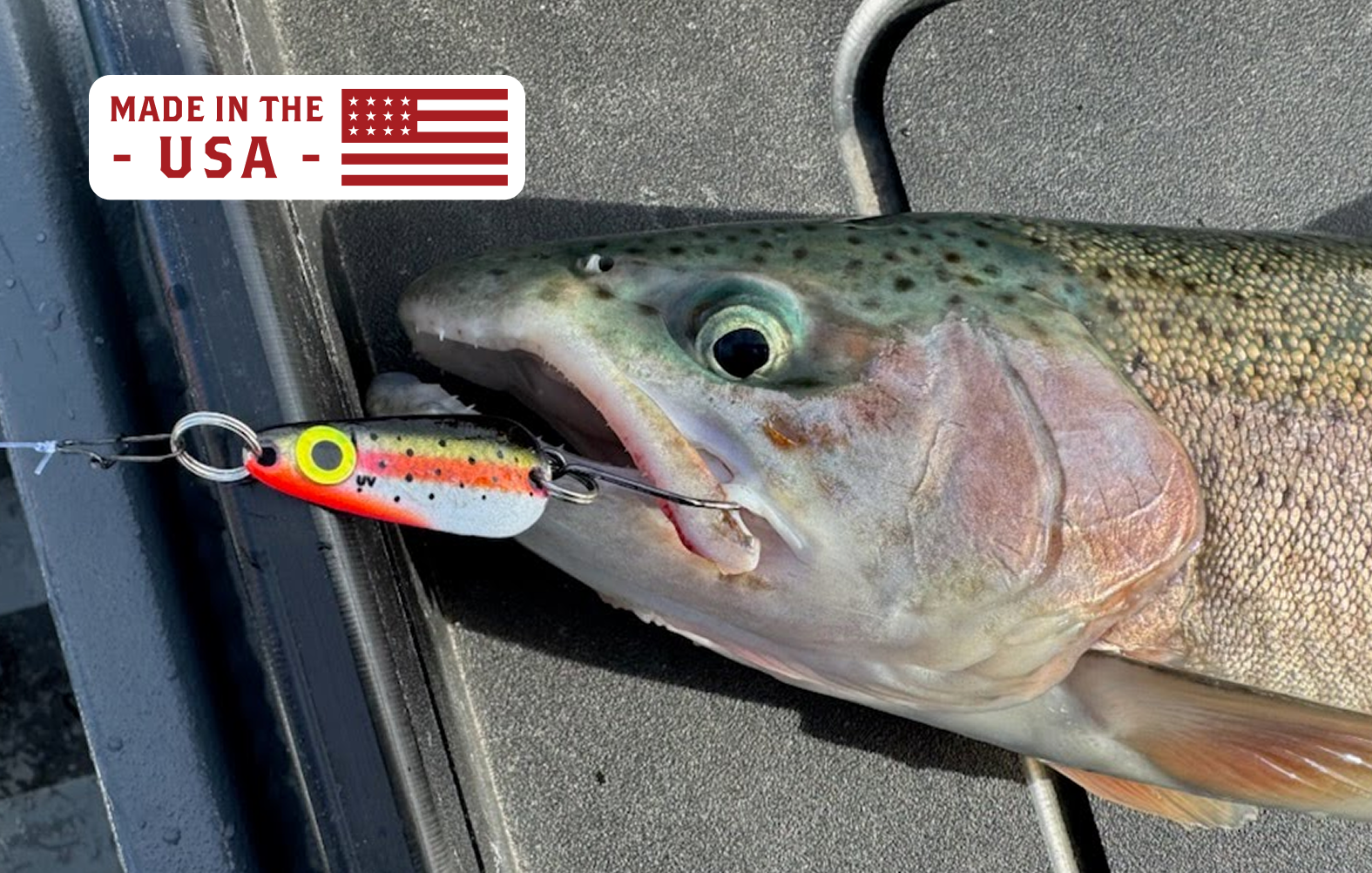
Build a 36 to 40 inch leader of 8 or 10 lb fluorocarbon with a number 4 ring-eye Mustad hook, a bead, two bobber stops, and a Trigger Disc with the stem facing the hook. Thread a Trix Worm so the hook rides halfway to two-thirds down the body. Slide the disc near the nose for a hard wiggle. One worm lands 8 to 10 fish.
How do you rig an Uncle Larry's worm spinner for trout?
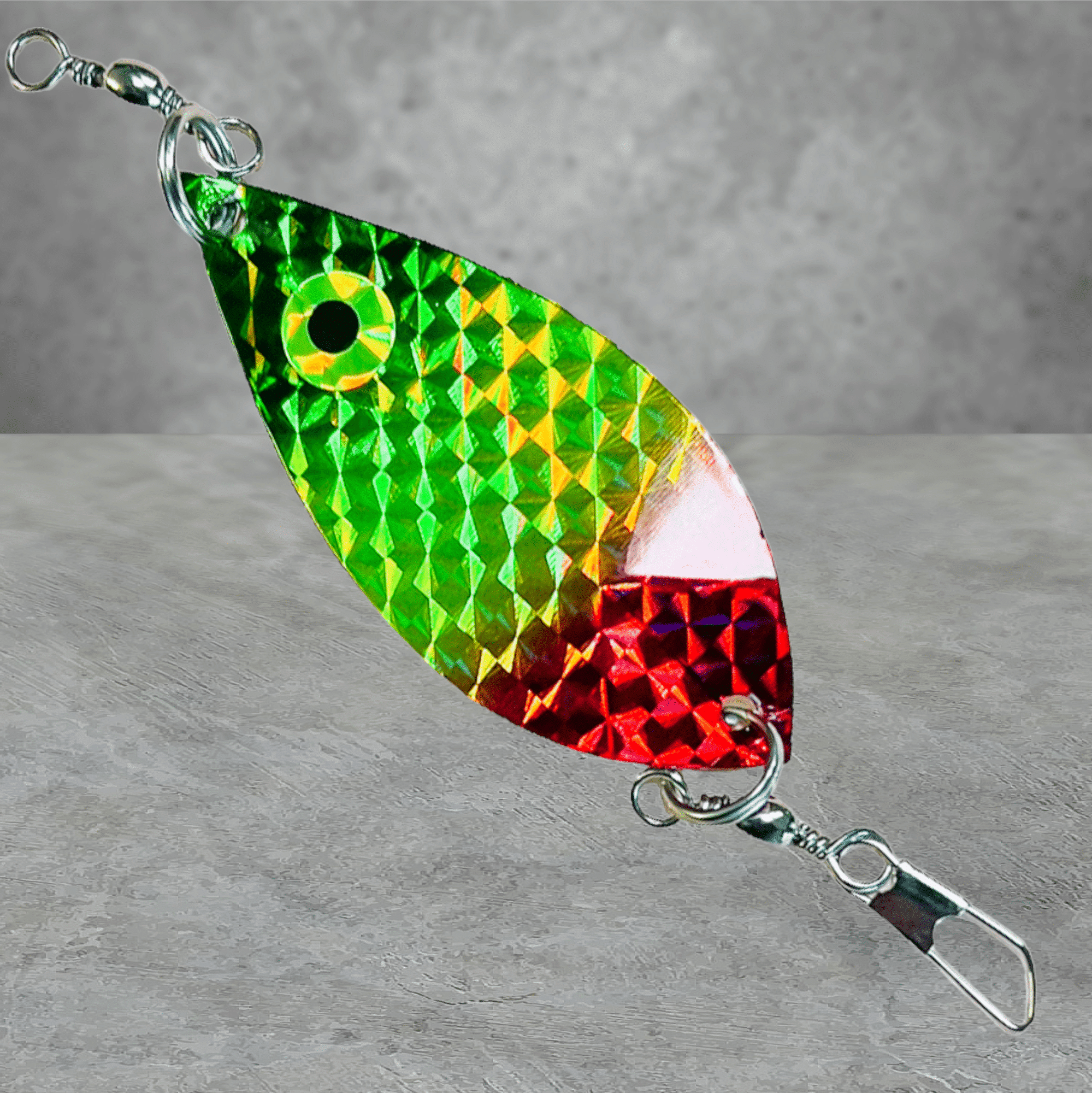
An Uncle Larry's Pro Snell uses a single ring-eye worm hook instead of the usual double-hook kokanee setup, plus a bobber stop so you can slide the blade up or down the leader. Thread half a nightcrawler on the hook and slather it in scent. The orange, chartreuse, and fire tiger blades put off flash and vibration that pull tentative trout in for a taste.
How do you rig a two-hook worm harness?
For very finicky trout, run a snelled two-hook harness on an 8 lb leader with a Trigger Disc and a couple of bobber stops. Snap off a 2.5 to 3 inch head section, set the top hook in the tip of the head, then insert the bottom hook near the tail. The disc rolls and rotates the bait so a short-striking fish still finds a hook.
Can you troll a worm behind a flasher or dodger?
Yes. Run a threaded half-crawler about 18 inches behind a Turbo Flasher on a slow death hook and troll it slow, near 1.8 mph. Behind a dodger, drop the action disc and run the worm 30 to 40 inches back so the blade imparts a stop-and-dart action. The attractor calls fish in, the worm closes the deal.
How deep should I troll a worm for trout?
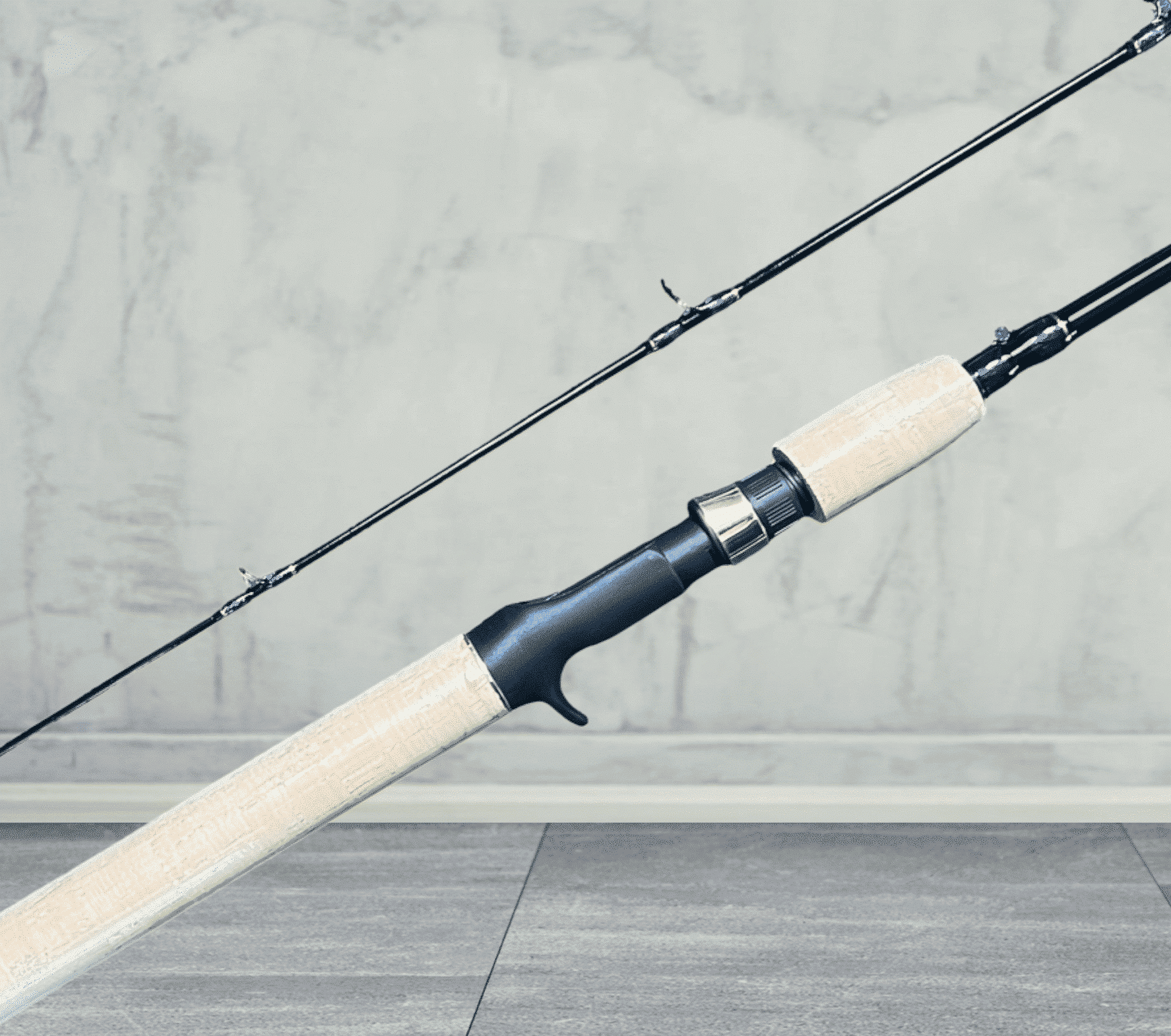
Worms shine in the top of the water column. Cal runs them 10 to 20 feet down on hybrid leadcore with a leadcore trolling rod, or top lines them with a small trolling weight a few feet under the surface. Keep a little slack, since a light-biting trout will mouth and play with a real worm before committing. When the line loads up, it is fish on.
What hooks and scent work best for trolling worms?
Use a number 4 ring-eye Mustad hook for a fully threaded worm, or a Mustad slow death hook for a rolling half-crawler behind a flasher. Bend the slow death hook a touch more to make the worm spin harder. Slather the bait in scent so a tentative fish holds on. Always run a fluorocarbon leader to stay invisible.
Watch the technique
Rigging and trolling worms for trout FAQ
Use the head end, the pointier, firmer end where most of the worm's muscle is. Break the crawler in half and thread the head section. It stays on the hook better and holds up through more fish than the softer tail end.
Run the hook point from halfway to two-thirds down the body, and closer to the tail when fish are finicky. Short-striking trout tend to nip the tail, so a hook set deep toward the back turns those taps into hookups instead of missed bites.
Cal gets 8 to 10 trout per worm when the bite is on, and 6 to 8 on the fully threaded ring-eye rig. Take your time unhooking fish so you do not tear the bait, and one well-threaded crawler keeps producing fish after fish.
Run 8 or 10 lb fluorocarbon. Fluorocarbon reflects light at nearly the same rate as water, so it is almost invisible to trout. Ten pound test is stiff enough to transfer a dodger's driving action to a no-action worm.
When trout are tentative they nip and pull at the bait. A tail dangling past the hook gives them something to grab with no hook in it, so they steal the bait and drop off. Slide the worm so it ends right at the hook point.
Fish a slight slack line and let the trout taste and work the worm. In a power boat, pull the rod out of the holder and manipulate it. In a kayak, use the pedals to move the bait into the fish's mouth, then load up and set when the fish commits.
Yes. Even though a nightcrawler is real meat, adding scent gel helps light-biting fish hold on longer. On tough, post-front days the extra taste and smell can be the difference between short strikes and fish in the net.
Yes. The same 36 to 40 inch fluorocarbon leader with a Trigger Disc, bead, and two bobber stops fishes a Trix Worm, a Trix Minnow, or a Trix Grub. Just match the hook point to the bait and slide the disc to the nose for maximum wiggle.