
How to Top Line Troll for Trout (No Weight)
Top lining for trout: how to run spoons, flies, and soft plastics in the top 5 feet with no downrigger, dodger, or leadcore.
Top lining means running a lure a set distance behind the boat in the top 5 feet, with no downrigger, dodger, or leadcore. Rig 10 lb main line through a bead to a trolling swivel and an 8 lb fluorocarbon leader. Run a Trigger Spoon clean and it rides only 1 to 2 feet deep 100 feet back at 2.5 mph. For flies or soft plastics, add a small 3/8 ounce weight and a Trigger Disc to sink the rig under the surface. Start 100 feet back from a powerboat, 65 feet from a kayak.
What is top lining for trout?
Top lining is putting a lure on the end of your line and running it a set distance behind the boat in the top 5 feet of the water column. There is no downrigger, dodger, or leadcore involved. Cal Kellogg uses it in fall, winter, and early spring when active trout hold near the surface, often close to shore.
How do I rig a top lining setup for trout?
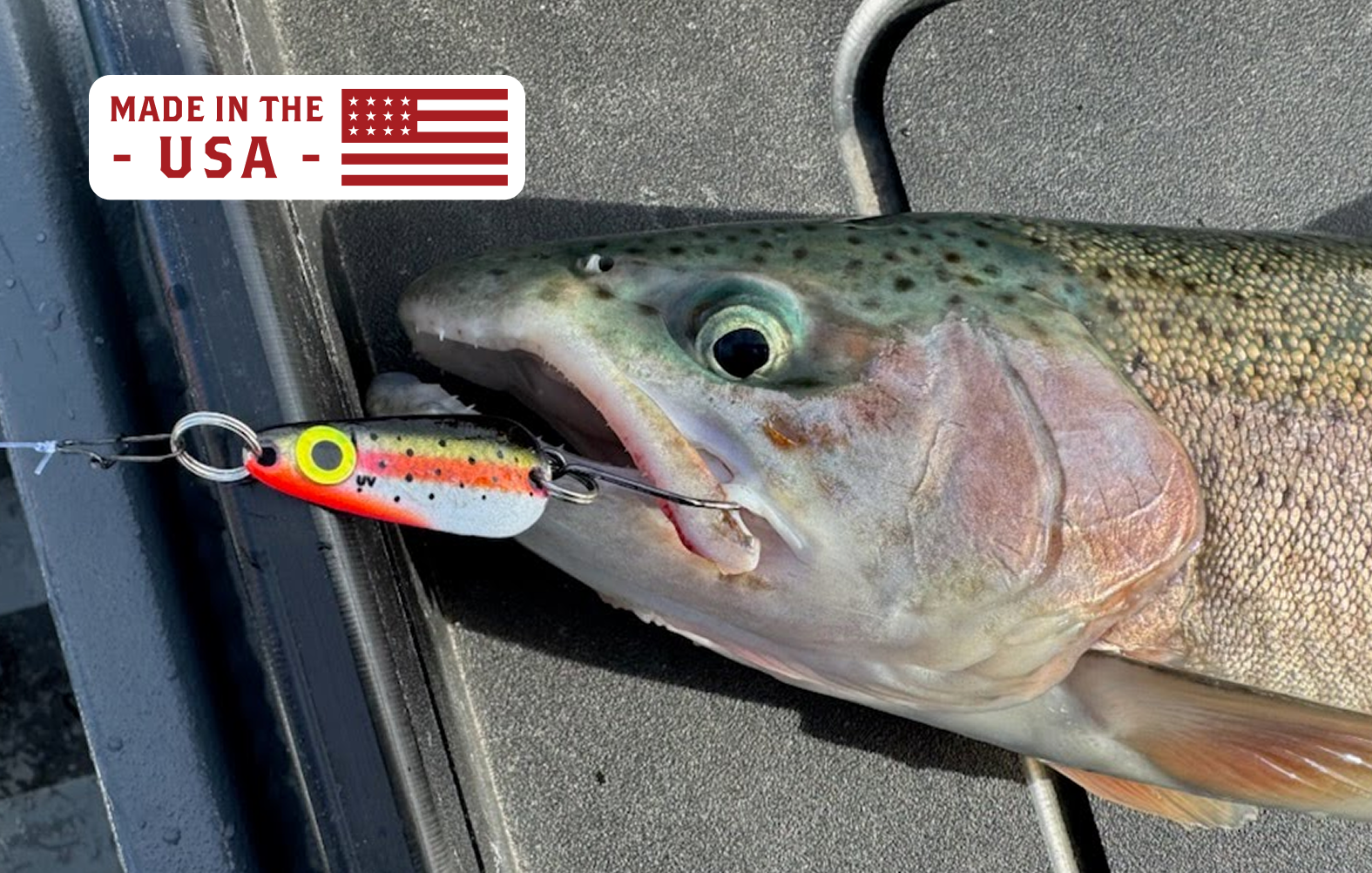
Cal runs 10 lb main line down through a bead to a trolling swivel, then an 8 lb fluorocarbon leader to a cross lock snap and the lure. A spoon or plug rides under the surface with no added weight. A Trigger Spoon fished clean is his basic top line rig, with no weights, dodgers, downrigger, or leadcore.
How deep does a top lined lure run?
Depth is dictated by what you tie on. A spoon 100 feet back at 2.5 mph rides only 1 to 2 feet deep, which is exactly where Cal wants it in cold water. Swap to a 3 inch minnow plug at the same 100 feet and it dives to about 12 feet, so the same setback fishes a very different depth.
When do I add a weight to a top line rig?
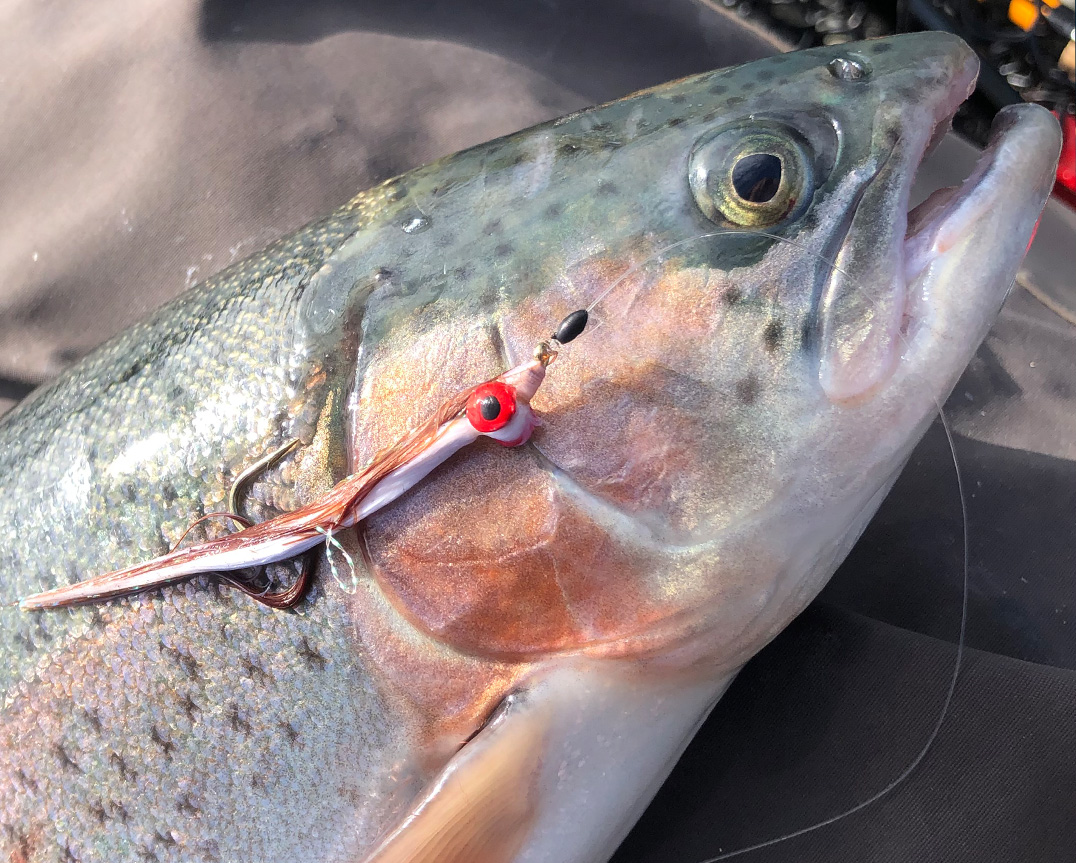
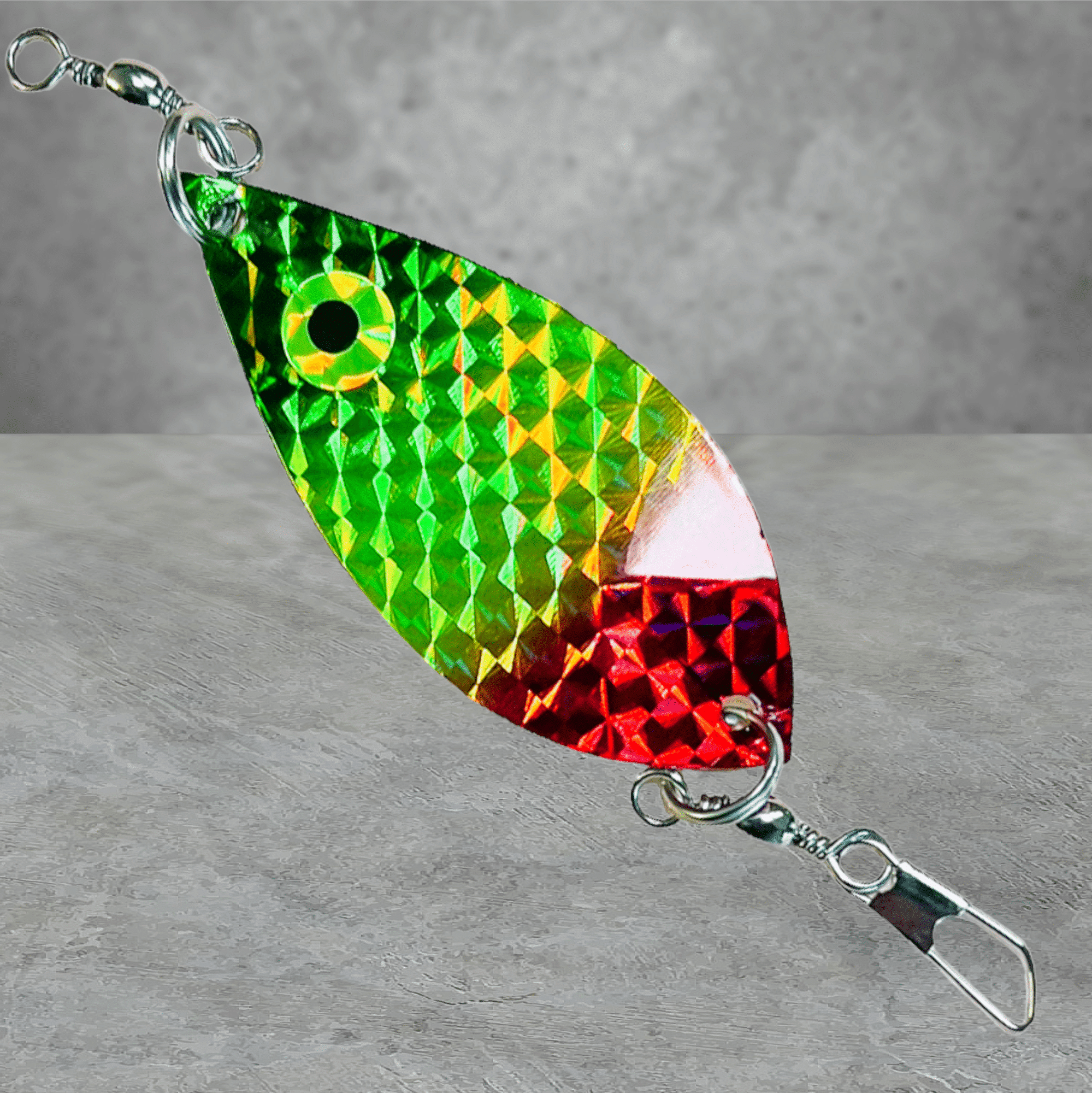
Add weight when running a fly or soft plastic that has almost no mass of its own. Cal pins a small 3/8 ounce trolling weight between the swivel and leader so a Trigger Disc paired with a fly or a Trix Minnow slips under the surface. This weighted fly rig produces most of his biggest trout each year.
How far behind the boat should I set my top line?
From a kayak, 65 feet is a solid start. From a powerboat, begin at 100 feet, then experiment longer. On his guide boat Cal scopes one long top line a full 200 to 225 feet back. He does not get many strikes on it, but the biggest fish of the day, sometimes over 8 pounds, often comes on that far trailing line.
What is the best top lining spread for trout?
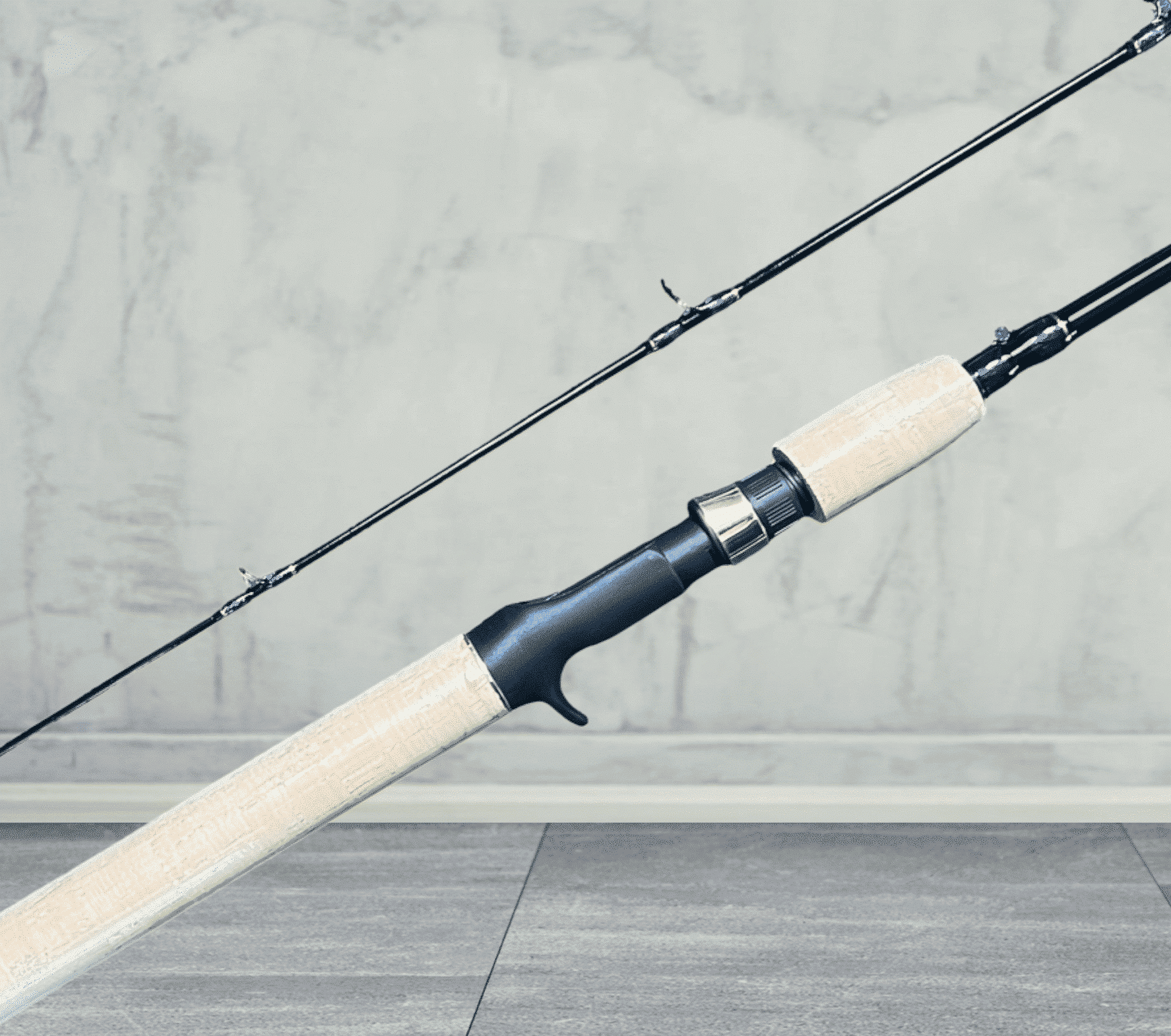
Cal runs four rods: three hybrid leadcore rigs at 5, 10, and 15 feet deep, plus one top line fly with a Trigger Disc and small weight scoped 200 to 225 feet back. In the top 20 feet during late fall through early spring, his hybrid leadcore rigs outfish a downrigger. A Cal's Leadcore Trolling Rod handles the leadcore lines.
Can I top line troll with a spinning rod?
Yes, and Cal likes it from a kayak. Instead of feeding line off a line counter, he casts a small weighted fly out and lets it swing back into the spread, setting it 50 to 90 feet back. He pegs the wiggle disc about an inch from the fly with a bobber stop and runs a rust or tui chub pattern fly.
What lures work best for top lining?
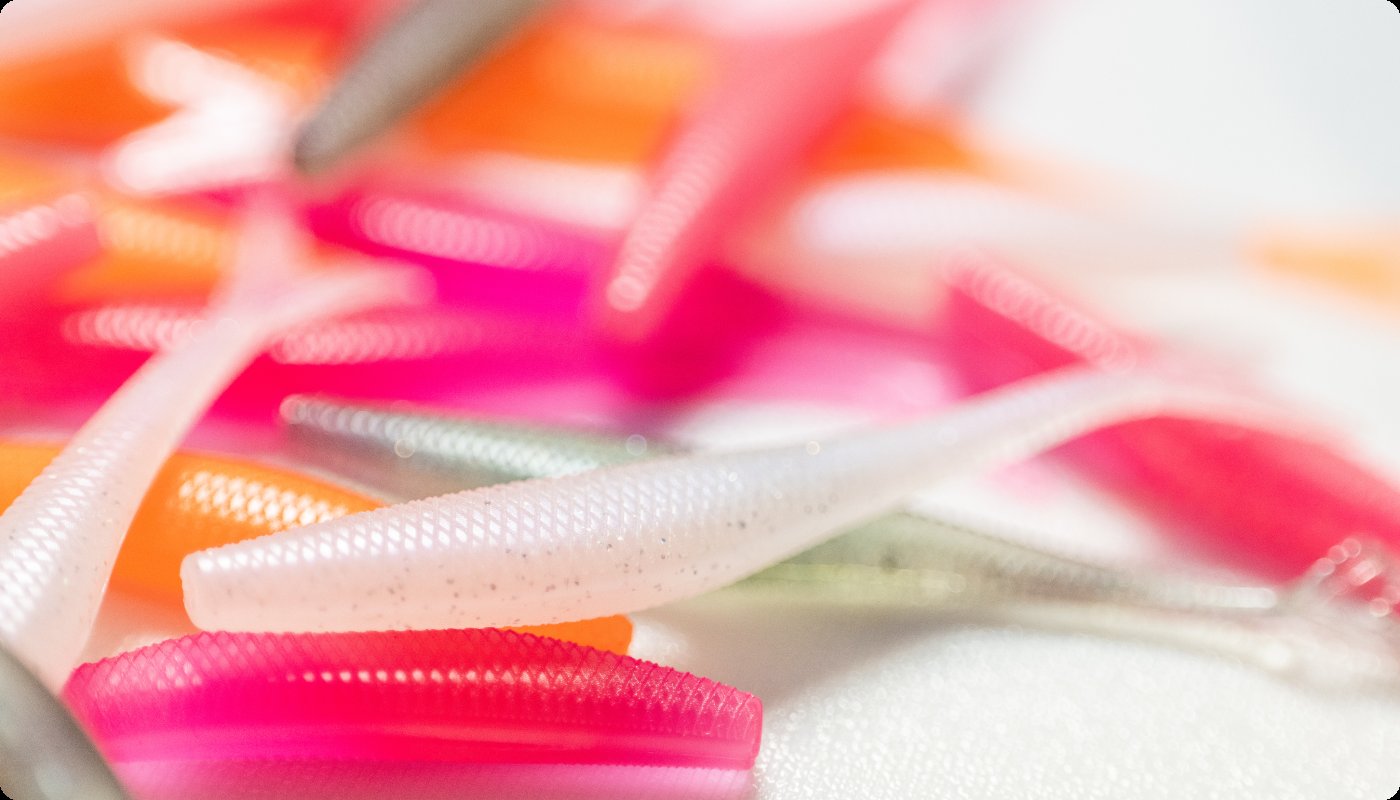
Cal top lines with spoons, trolling flies, and soft plastics. A Trigger Spoon runs clean with no weight. Trolling flies like the Metal Head Fly paired with a disc and small sinker catch his biggest fish. Soft plastics such as Trix Minnows round out the spread.
Watch the technique
Top lining for trout FAQ
Cal runs 10 lb Trilene Big Game main line down through a bead to a trolling swivel, then ties an 8 lb fluorocarbon leader to a cross lock snap. It is the same rig he would fish off a downrigger, just run flat behind the boat.
About 2.5 miles per hour. At that speed a spoon set 100 feet back stays only a foot or two under the surface, which keeps it in front of the shallow, active trout Cal targets in cold water.
Usually a small 3/8 ounce trolling weight, added right at the junction between the trolling swivel and the leader. From a kayak Cal sometimes uses just a single split shot to drop a fly just beneath the chop.
No. Cal does not run a dodger on the top line. He runs spoons and flies clean up top, and only adds dodgers from time to time on his leadcore rods, starting small and increasing size as needed.
An 11 pound rainbow at Collins Lake on a number 8 white junior trolling fly paired with an action disc, running just 2 to 3 feet deep. His biggest wild rainbow, a 7 to 8 pounder at Lake Eleanor, also came top lining a fly with a single split shot.
The far setback line often picks up the biggest fish of the day. Cal thinks trout enter the main spread, reject those baits, then see the last offering silhouetted overhead and commit. Many of those fish top 8 pounds.
Late fall, winter, and early spring, when Cal does not run his downriggers much. The active feeding trout sit high in the water column, frequently close to shore, right where a top lined lure or hybrid leadcore rig works best.