
Rapalas vs Trolling Flies: Which Catches More Trout?
Rapala vs trolling fly for trout: why a trolling fly out fishes a minnow plug for trophy trout, and how to rig and troll it at any speed.
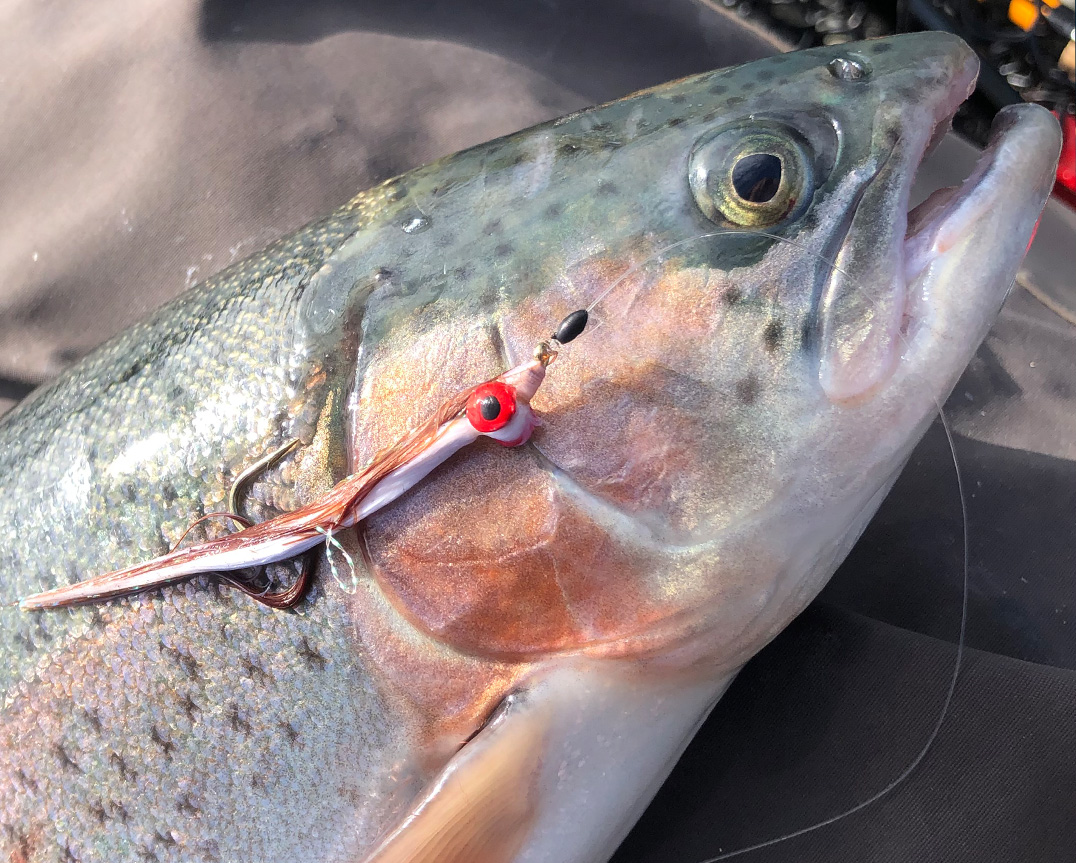
For trophy trout, a trolling fly out fishes a Rapala. Cal Kellogg's confidence big fish bait is a Metal Head trolling fly, not a minnow plug. Fish see flies less often, and the soft fur and marabou make them hold on longer, so you hook and land more big fish. Flies fish at any speed, from 1 mph next to a worm up to 3.8 mph power trolling. Team a fly with a Trigger Disc on the nose and run it 150 to 200 feet back.
Do trolling flies catch more trout than Rapalas?
For big fish, yes. Cal Kellogg's personal best wild rainbow, over seven pounds, and dozens of eight pound plus fish came on a Metal Head fly. Fish see flies far less than rapalas, so you often get the first strike on an object they have never learned to avoid.
Why does a trout hold a fly longer than a Rapala?
A fly is soft rabbit hair and marabou, so the trout engulfs it and it folds up in his mouth. Those extra hundredths of a second let the hook find its mark, so you hook deeper and land more fish. A hard plug feels wrong instantly and the fish spits it.
Can you troll flies fast like a Rapala?
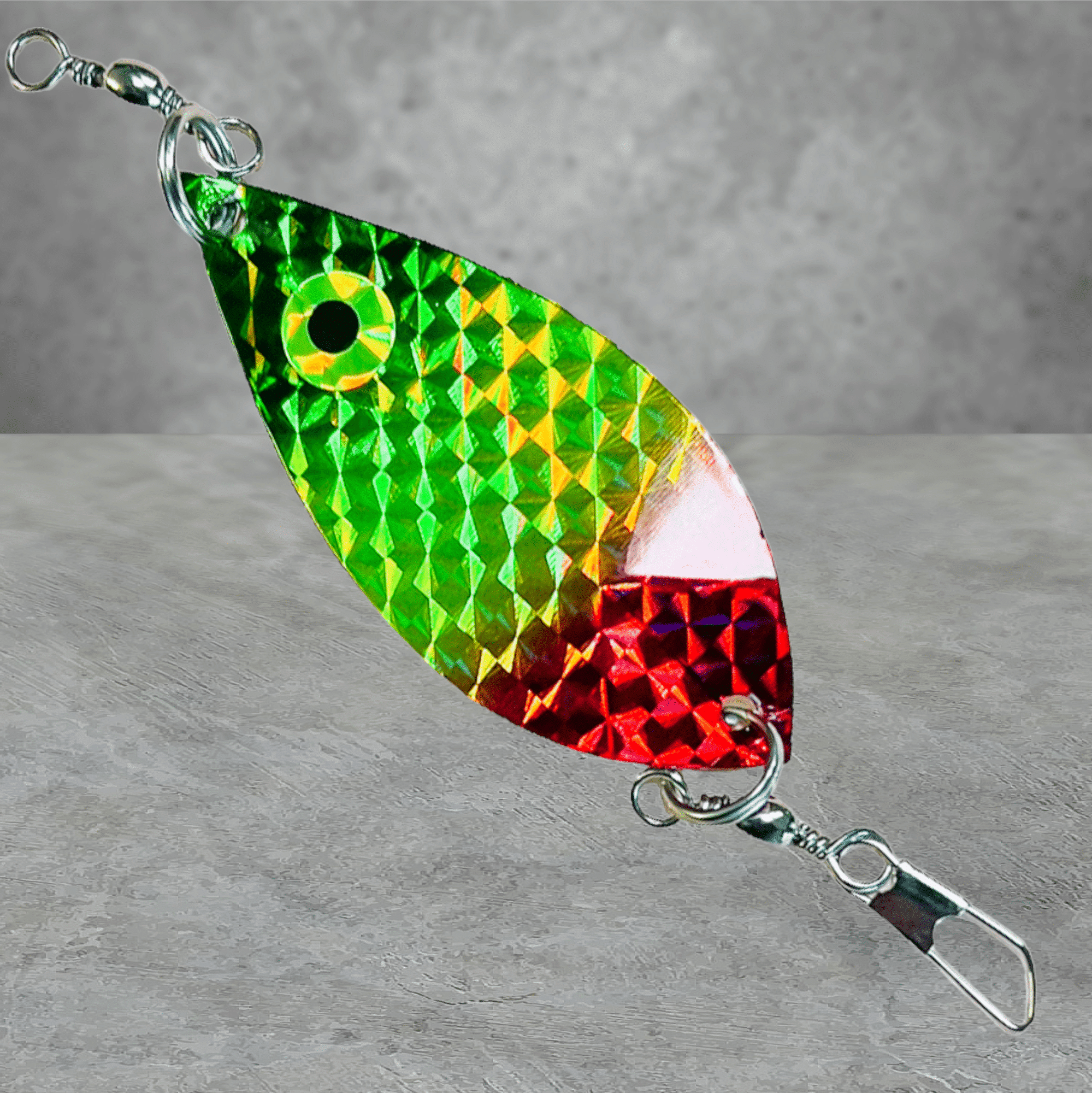
Yes. A metal head fly teamed with a Trigger Disc on the nose trolls at Rapala speed, 2.5 up to 3.5 mph, and Cal has caught fish at 3.8 mph. The metal head plus the wiggle disc puts out vibration a chasing trout cannot lay off of.
Why do you land more fish on a metal head fly at speed?
The hook. A Magnum Metal Head carries a large number four J style hook that buries in the jaw and stays put. The tiny treble hooks on a minnow plug pull out when you power troll. Cal landed every metal head fish one day but only half the fish hooked on rapalas.
What colors of trolling fly work best?
Play with color like any lure. Black gives hard contrast in stained water and was Cal's top big fish color at Collins Lake. Olive and white, pink and white, and orange are staples. On shad lakes run a light, shatty pattern like white or blue.
How should I rig a trolling fly in my spread?
Devote one rod to a fly and keep it in the water about 90 percent of the time. Run it higher in the column and farther back than your other baits, 150 to 200 feet on a topline, especially with wind. A Trigger Fly or Metal Head on 10 pound fluorocarbon is Cal's go to.
Are Rapalas worth using at all?
They still catch fish as a numbers minnow bait, but they are expensive and heavily pressured. Cal builds his own affordable minnow plugs to fill that role. His real trophy edge is the fly, which the fish rarely see.
Should flies replace all my hard baits?
No, run both. Use a soft plastic like a Trix Worm for numbers and a fly for the big fish. On a slow day drop the fly next to a worm at 1 mph; on a fast day power troll it at Rapala speed.
Watch the technique
Trolling flies versus rapalas for trophy trout FAQ
No. You can control them from 1 mph all the way past 3 mph. Metal head flies are built with a weighted head specifically so you can troll them fast, at rapala speeds.
A large number four J style hook. It sinks around the jaw and holds far better than the small treble hooks on a minnow plug, which is why Cal lands more fish at speed.
Fish see them constantly and learn that the lure moving and sounding that way is not food. A fly gives the trout a first exposure they are far more likely to strike.
About 150 to 200 feet, higher in the water column than your other baits. That distance and the soft profile draw big trout, especially when there is wind on the surface.
Yes. Topline a fly about one foot deep, 150 to 200 feet back, with a single split shot. Cal caught his best wild rainbow that way on a white smelt pattern at 2.2 mph.
Far cheaper. A Rapala runs about nine dollars and a Yo-Zuri eleven, while Cal built his fly and plug lines as affordable alternatives that still fish.
A soft plastic worm or minnow catches numbers of pan sized trout. A trolling fly catches fewer but far bigger fish. Run one of each and you cover both.
For fast trolling, yes. Run the disc right on the nose of the metal head. The combined vibration triggers chasing trout, and it lets the fly track at higher speeds.