
Why Downsizing Lures Catches Bigger Trout
How and why downsizing to small lures for big trout produces trophy rainbows, with Cal Kellogg's spoon and fly tactics.
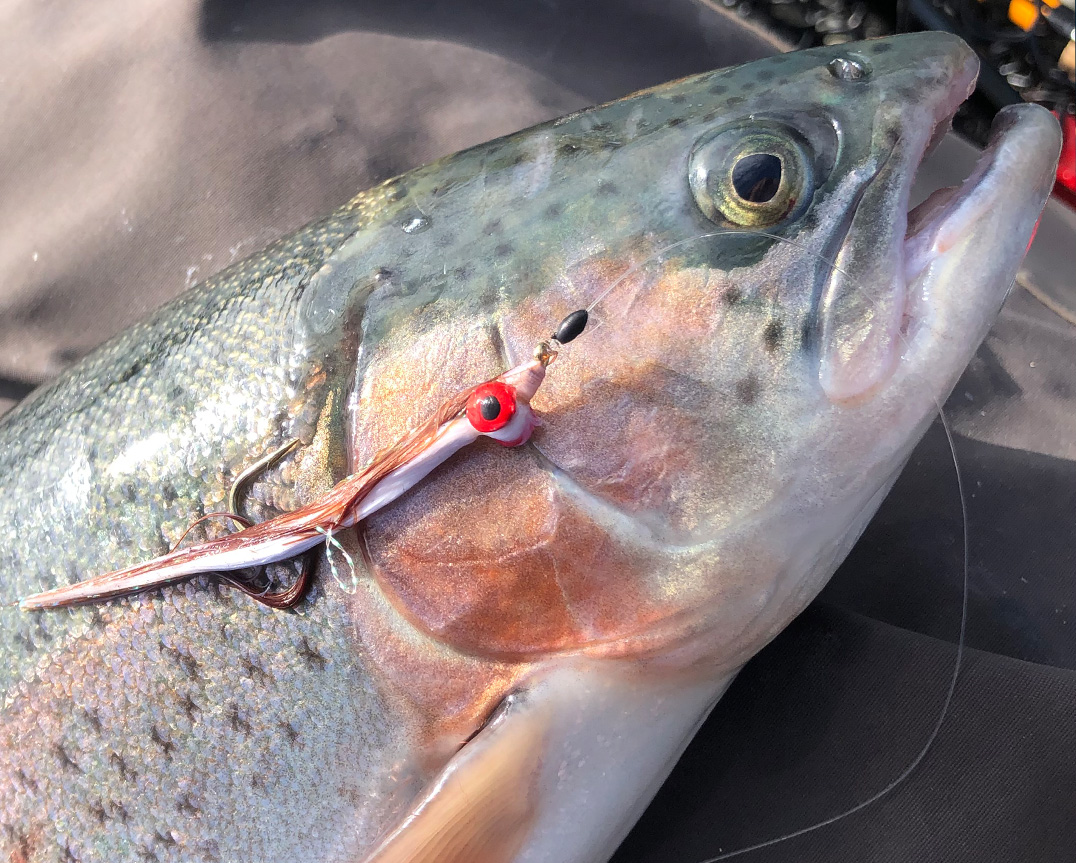
Big trout eat small bait, so downsizing catches them. On reservoirs full of pond smelt or threadfin shad, trout key on one baitfish, often just 1 to 1.5 inches long. Cal Kellogg matches that with a small profile like the Pinhead Spoon, which still trolls fast from 1.5 up to 3 plus mph, or a tiny trolling fly run under the chop. He has landed rainbows to 10 pounds on these little baits. When trout ignore full-size spoons, go smaller, not bigger.
Why do small lures catch big trout?
Because big trout are often eating small bait. Western reservoirs with pond smelt or threadfin shad fish like the ocean, with every predator keyed on one baitfish that may be only 1 to 1.5 inches long. Trout are selective feeders, so when they lock onto tiny shad, a big Rapala offers no advantage. Match the hatch and the big fish eat.
How do I know when to downsize for trout?
Watch what the fish tell you. When a trout you land spits up little 1 inch shad, that is your cue to shrink your profile. Downsize too when fish get finicky or stop hitting your full-size spoons, Speedy Shiners, or needlefish. Cal Kellogg routinely puts on a small spoon or fly the moment the aggressive bite pinches out.
What small spoon can I still troll fast?
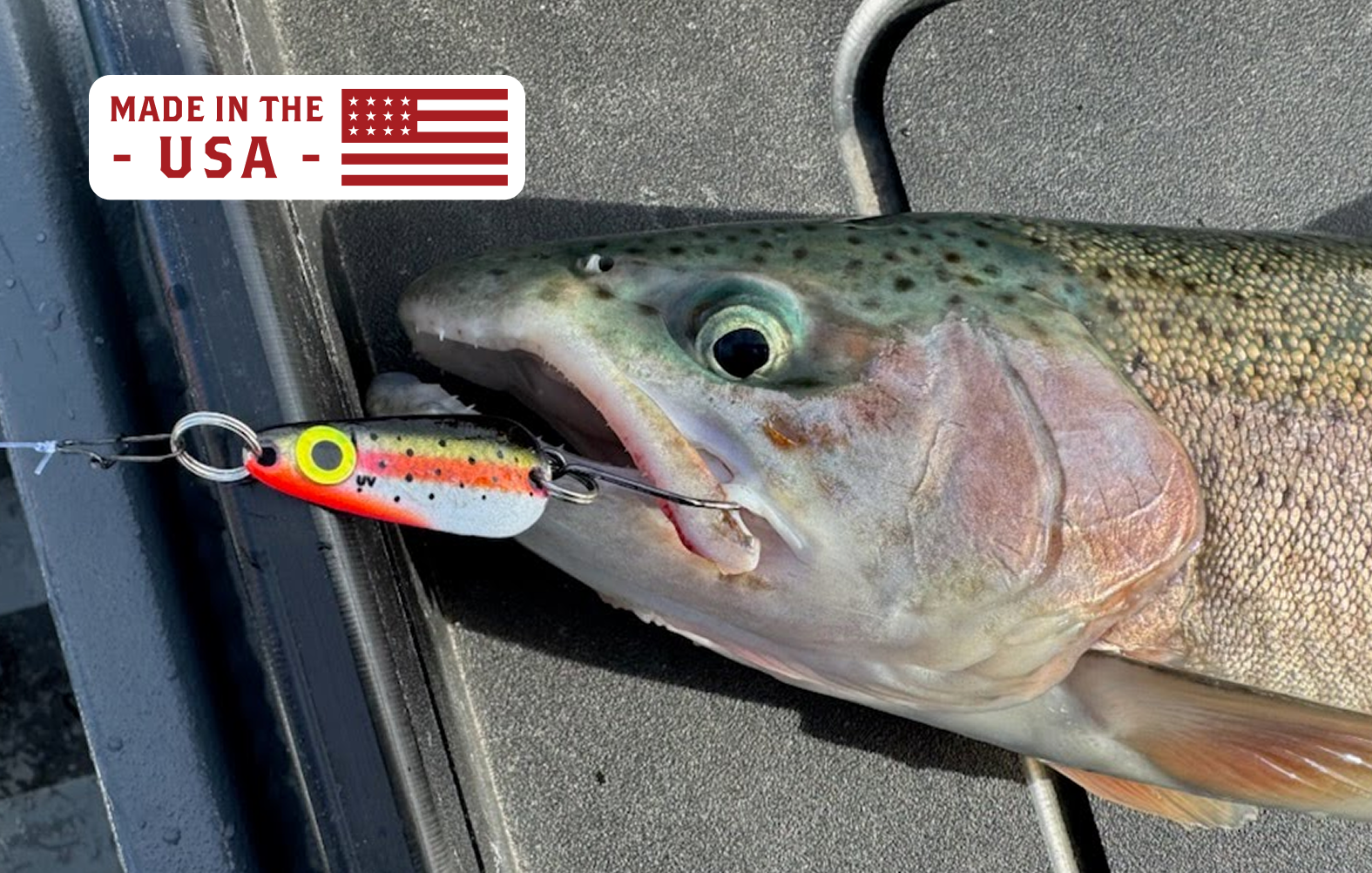
The Pinhead Spoon. It weighs about 1/8 ounce, so it is denser and heavier than a thin spoon and holds its swimming action from 1.5 mph up past 3 mph. That lets you match tiny bait without slowing down. Cal runs it clean on lead core, roughly 8 to 10 feet down, with no dodger.
Can small lures really catch big fish?
Yes. Cal Kellogg has landed rainbows around 9 and 10 pounds on a tiny junior trolling fly and boated very nice trout and salmon on the small Pinhead. Big bait big fish is sometimes true, but do not discount a small bait's power. When trout are keyed on 1 inch shad, the small offering out-produces the big one.
Do I need a dodger with a small lure?
No. Trout will find a tiny fly or spoon 200 feet behind the boat over open, deep water, because locating small prey is their business. Cal runs small flies and the Pinhead naked, no 4 or 6 inch dodger required. In fact a big attractor can spook finicky fish, so a subtle, clean presentation often wins.
Why are trolling flies Cal's top big-trout lure?
Two reasons. Far fewer anglers pull trolling flies than Rapalas, so the fish have not learned them and are more likely to eat. And a fly is soft, so a trout holds it those extra split seconds instead of instantly rejecting it like a hard plug. That means deeper hooksets and more big fish landed.
How fast and deep can I troll flies?
Across a huge range. Cal trolls flies as slow as 1 mph and has caught fish at 3.8 mph, so they compete with Rapala speed. When the surface is below 65 degrees he top-lines a fly about 1 foot deep under the chop, 150 to 200 feet back. Otherwise he runs them 15 to 25 feet down on a downrigger.
What does a complete downsizing kit look like?
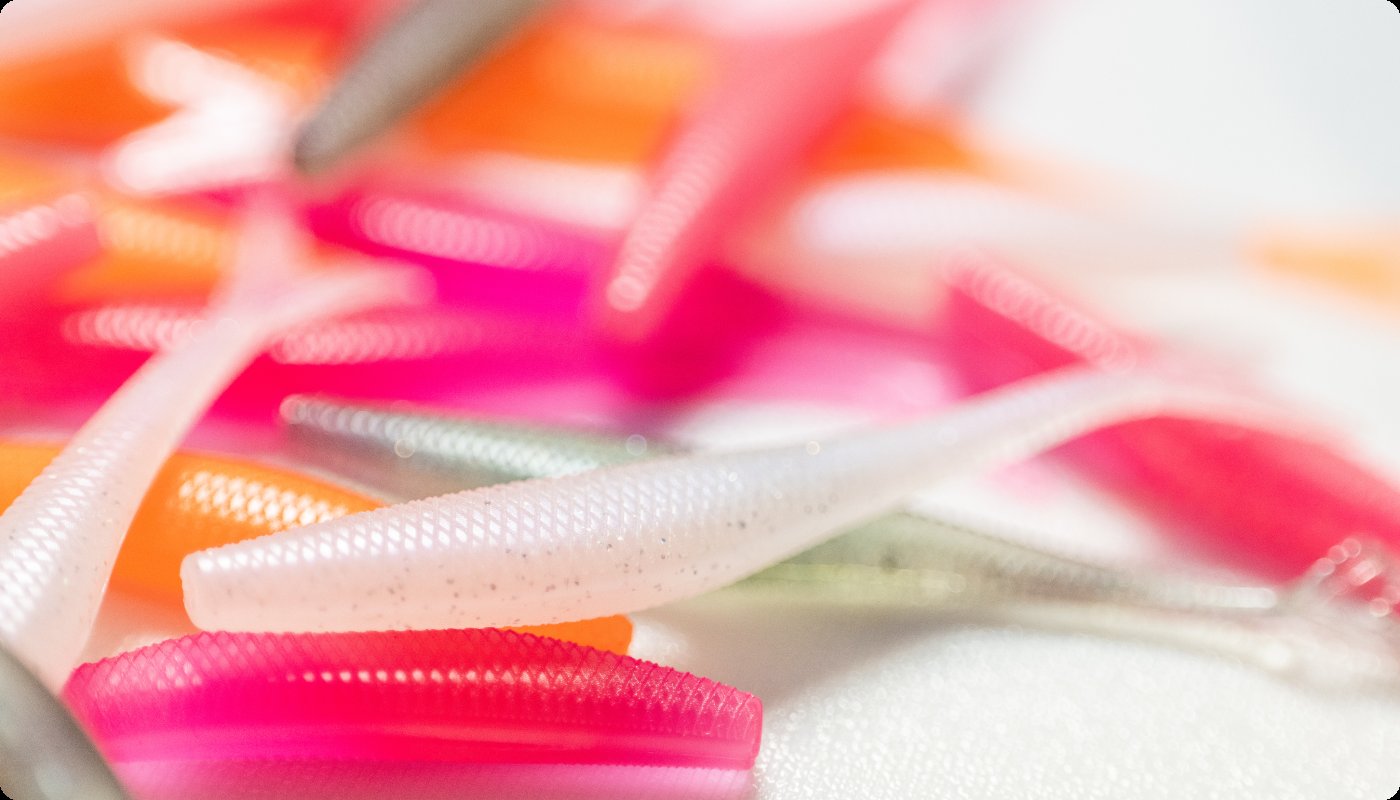
A spread of spoon sizes plus soft baits. Cal says he could fish all season with just Speed Spoons, Trigger Spoons, Trigger Juniors, and Pinheads, plus Trix soft plastics, Metal Head flies, and a few Trigger Buggers. That range covers big, fast, medium, and small in any conditions.
Watch the technique
Small lures for big trout FAQ
On smelt and shad reservoirs, often just 1 to 1.5 inches. Cal has landed trout that spit up little partly digested shad about that long. When that is the forage, a 1 inch to 2 inch profile matches far better than a big plug, and the selective trout respond to it.
The white silver-back with a red eye is a proven baitfish match. The Pinhead also comes in orange, red, 24 karat gold, copper, genuine silver, pink, and chartreuse. Cal has even added pink and blue tape to a silver one to trigger fish keyed on small bait in summer.
When the surface is 65 degrees or colder and it is breezy. Cal runs a small junior fly about 1 foot deep, 150 to 200 feet back, riding just under the surface chop. That subtle presentation has produced trout over 10 pounds for him right after lunch on breezy days.
Yes. It began life in Sweden as an ice-jigging spoon, meant to drop through a hole and jig up and down tipped with a maggot or bit of worm. Cal found it also has exceptional swimming action trolled across a broad speed range, which is what makes it unusual.
They complement each other. Cal runs a naked worm for numbers and pan-size fish and a trolling fly for the big ones, both around 1.8 mph. The worm gets a lot of action from smaller trout while the fly quietly puts the heavyweights in the boat.
Yes. Many anglers will troll a Rapala for two hours on reputation but pull a fly after 15 minutes. Give trolling flies a real chance. Cal is confident they will prove their worth and become your go-to big-fish lure, teamed with a wiggle disc.
A trout that touches a hard plug instantly feels it is not a baitfish and learns to avoid that look and sound. A soft fly feels lifelike and folds up in the fish's mouth, and because far fewer anglers pull flies, the trout are seeing it for the first time and commit.
Yes. Cal also top-lines the copper Pinhead with no weight, running it 1 to 2 feet deep and 175 to 200 feet behind the boat on an 8 pound fluorocarbon leader at about 2.6 to 2.7 mph. That fast, clean presentation mimics a fleeing pond smelt and draws reaction strikes from finicky rainbows.