
How to Troll Spinners for Trout & Kokanee
How to troll spinners for trout and kokanee, with rigging, trolling speeds, colors, and scent tips from guide Cal Kellogg.
Spinners are a slow troll bait. For kokanee, run an Uncle Larry's spinner behind a dodger and tip both hooks with shoe peg corn, trolling 1.3 to 1.8 mph. For trout, top line a Power Spinner tipped with a rotating half nightcrawler on a slow death hook and 10 lb fluorocarbon, 175 feet back. Coat the beads with Trigger Scent. Bright blades early, copper and gold blades midday.
How do you troll spinners for trout?
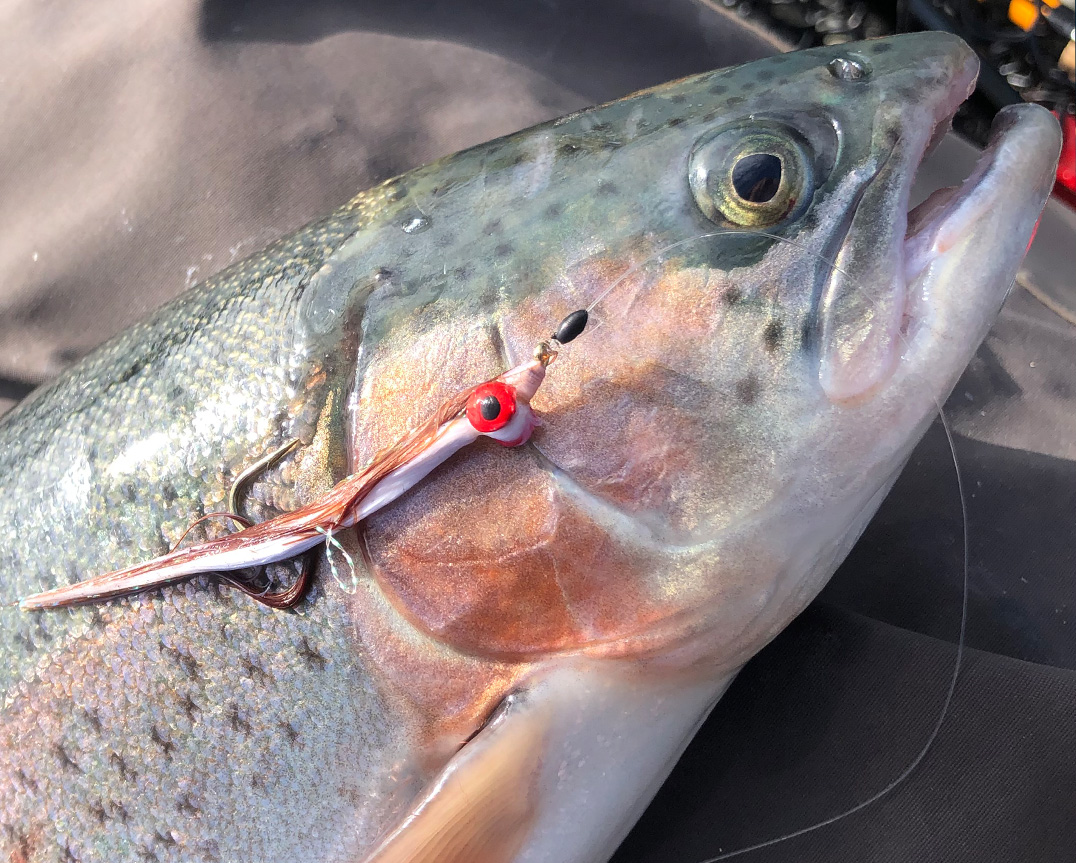
Top line the spinner behind a small trolling weight and let it back about 175 feet as your drag line. Cal Kellogg tips a Power Spinner with a half nightcrawler on a red slow death hook so the worm rotates. Run 10 lb fluorocarbon, add a bobber stop, and coat the beads with scent.
How do you rig a spinner for kokanee?
Kokanee is a slow troll game. Cal Kellogg runs a two hook Uncle Larry's spinner behind a dodger and tips both hooks with white shoe peg corn. Troll 1.3 to 1.8 mph, up to about 2. Bright, dual colored, and UV or glow bead spinners matter most to fickle kokanee.
How do you rig a nightcrawler on a trout spinner?
Break off about an inch to an inch and a half of crawler. Pass the hook through the tip, put a kink in the worm, then run the hook through again so it bends and rolls. Cal Kellogg slides a bobber stop on the leader so he can position the hardware right at the nose of the worm or scope it out for space.
What makes Uncle Larry's spinners different?
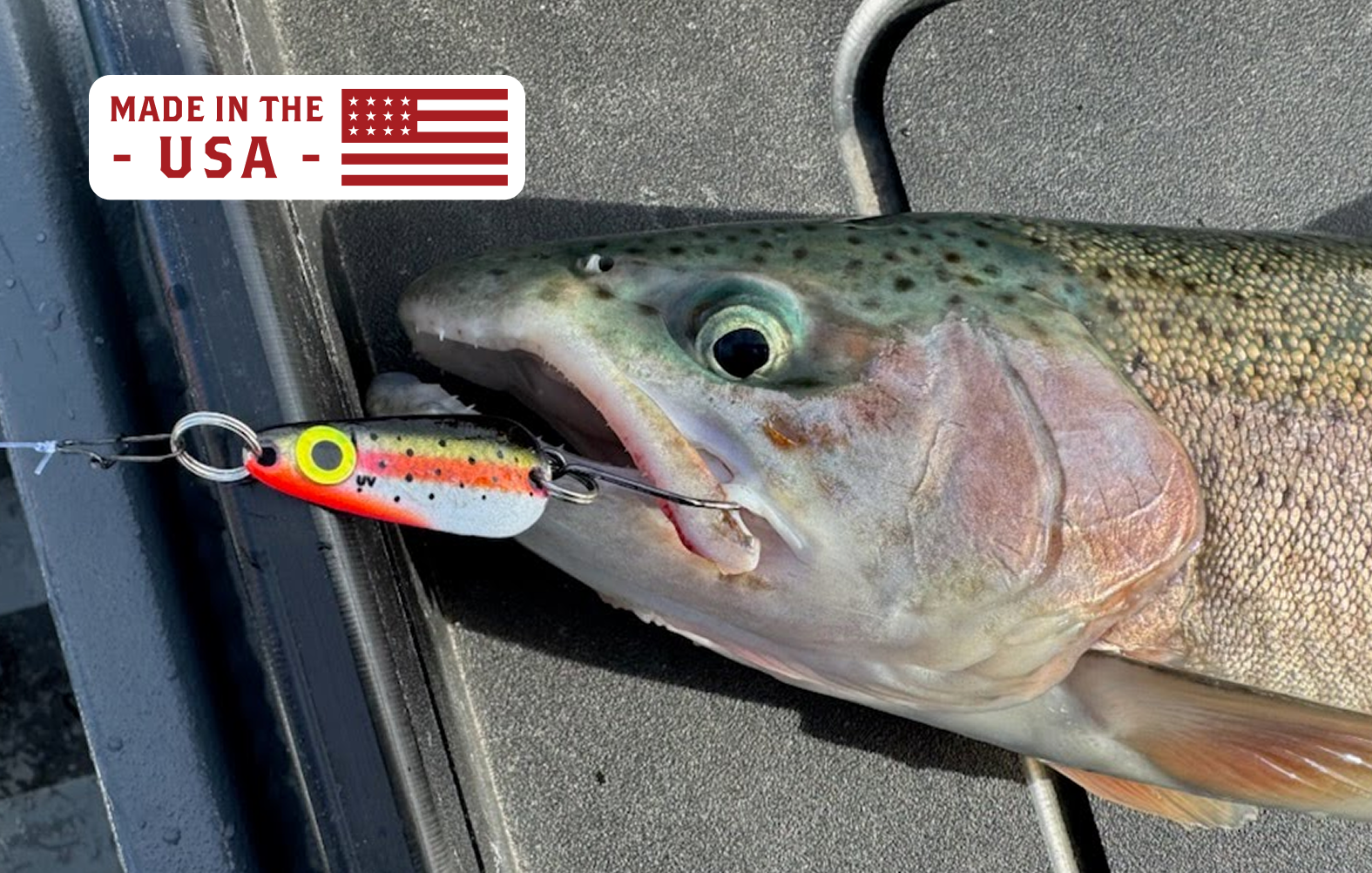
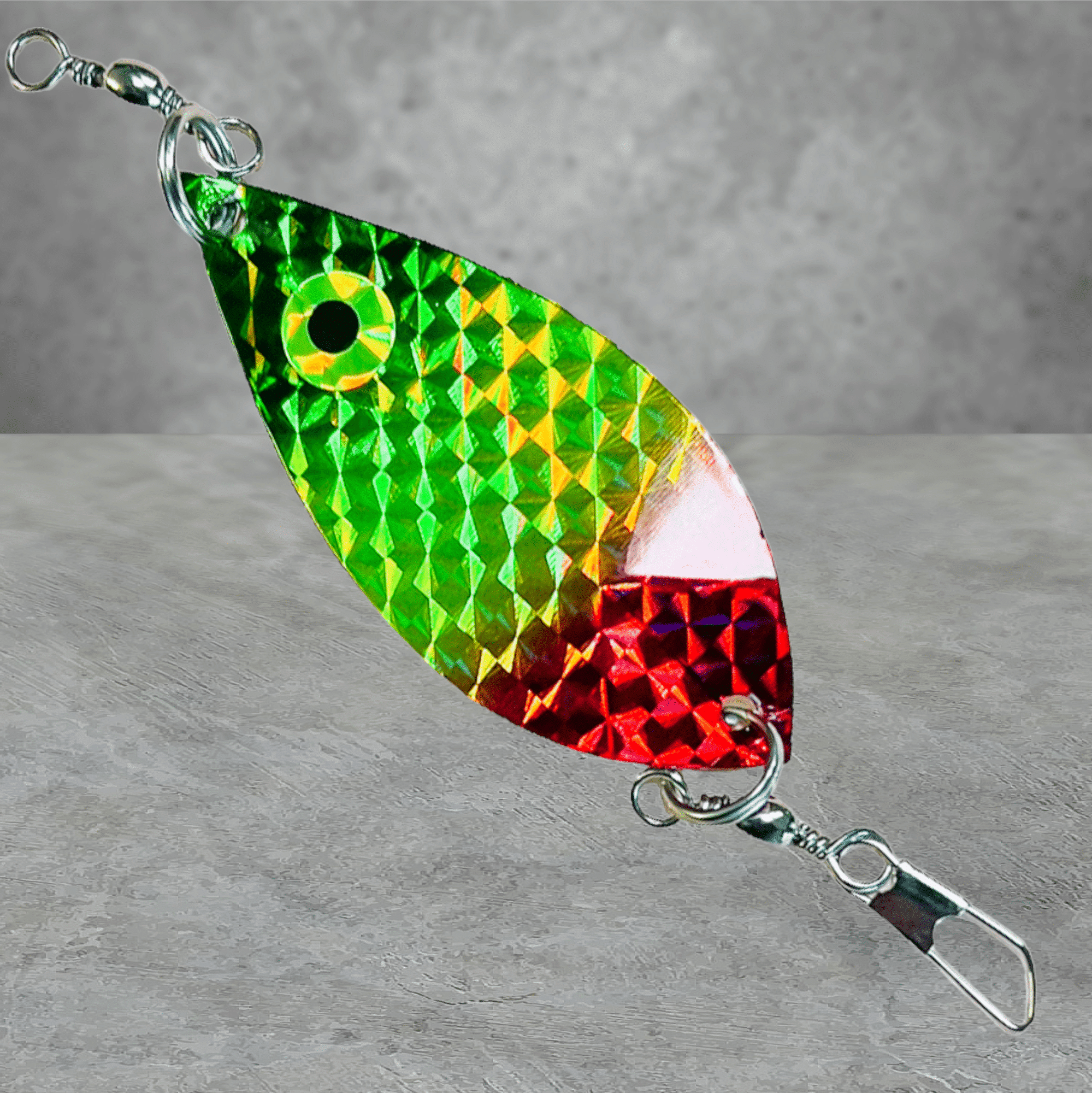
Premium build. Cal Kellogg points to UV coated painted blades, real 24 karat gold plate and real copper plate blades, and carefully designed multicolor, UV, and glow bead patterns. Real metal outperforms brass. Those color combinations are what trigger fickle kokanee when a mass produced wedding ring will not.
How fast should you troll spinners?
Slow. Cal Kellogg pulls kokanee spinners 1.3 to 1.8 mph. A finesse metal blade spinner works even slower, from a half mile per hour up to about 1.2 mph, drifting on the wind. At high noon when the water goes glassy, drop to three quarters of a mile per hour with a single kernel of corn for bonus fish.
What spinner colors should I use through the day?
Match the light. Cal Kellogg runs bright colored spinners early in the morning while fish are active. When the sun climbs and the lake goes glassy and the bite fades, switch to subtler copper and gold blades. Sometimes losing the dodger and running a naked spinner draws surprising midday fish.
Do I need a dodger to fish spinners?
Not always. For kokanee a dodger adds attraction and sets your slow trolling speed. For trout, Cal Kellogg often top lines the spinner naked behind a light trolling weight. When kokanee go into a midday funk, dropping the dodger and running a lone spinner very slowly can reignite the bite.
Watch the technique
Trolling spinners for trout and kokanee FAQ
Cal Kellogg runs 10 lb test fluorocarbon leader on his trout spinners. Fluorocarbon reflects light like water and is nearly invisible to fish. Ten pound is strong enough to handle a big trout while still letting the blade and a rotating nightcrawler spin freely.
Do not pack up when the first two hours of intense action fade. Cal Kellogg switches to subtler copper and gold blade spinners and often drops the dodger to run a naked spinner very slowly, around three quarters of a mile per hour, tipping the hook with a single kernel of shoe peg corn.
Scent closes the deal. Cal Kellogg coats the beads and the crawler with Trigger Scent, a blend of anise and fish oil. The spinner delivers flash and vibration, and when a fish moves in, the scent trail and real meat convert lookers into biters.
Yes. Uncle Larry's spinners were the number one kokanee bait in Northern California and Southern Oregon for decades and they also produce trout. Fish them tipped with corn for kokanee and with a rotating nightcrawler for trout. The Power Spinner is built for both.
Cal Kellogg tips a single red slow death hook for a rotating nightcrawler on the trout rig. The kokanee rig uses a two hook setup so you can tip both points with corn. A bobber stop lets you slide the hardware to the exact spacing you want near the bait.
Yes. Cal Kellogg says they work just as well now as they did 20 years ago, even though trendier baits have come and gone. The fish have not changed. For anglers who want to come back to the dock with limits of big kokanee and bonus trout, the spinner still delivers.