
Spring Trout Trolling Guide
Spring trout fishing tips on trolling shallow warming water with soft plastics, spoons, and flies.
Part of the Trout Trolling cluster: Start with the How to Troll for Rainbow Trout: Complete Guide, then use this spoke to dial in the specific setup.
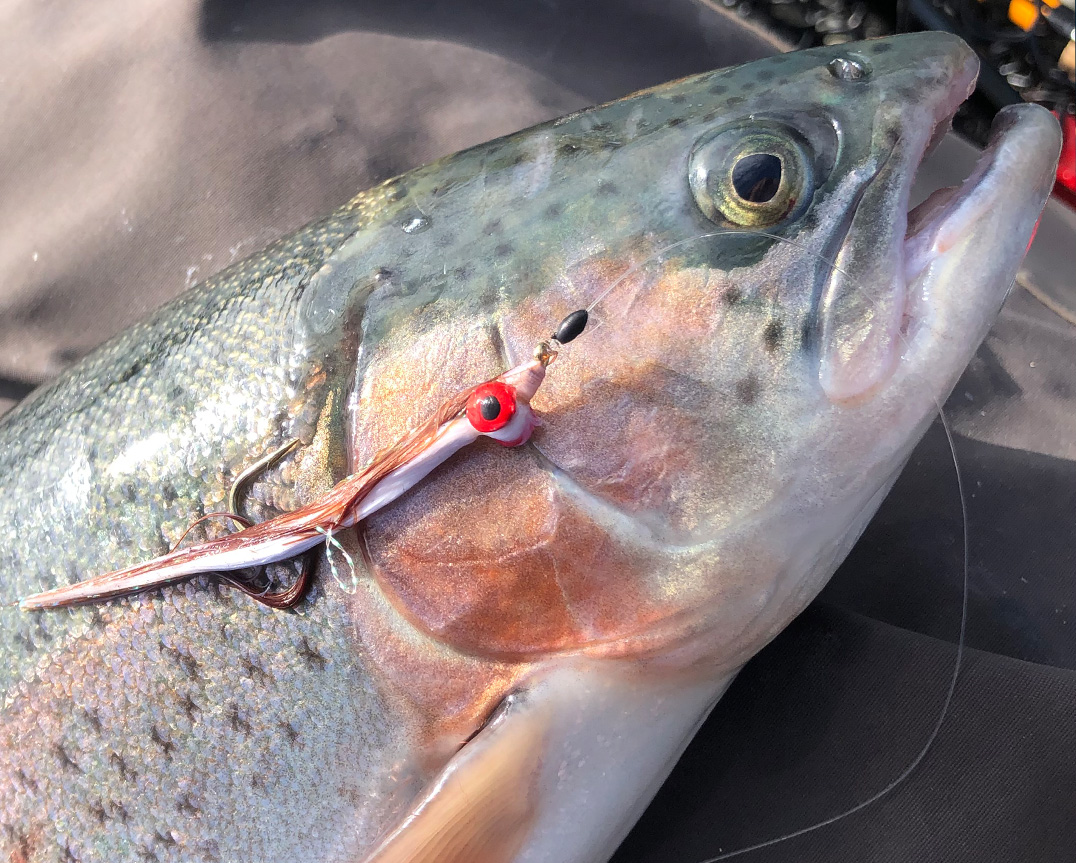
In early spring, rising water temperature drives the bite. Start slow in the morning with soft plastics like a Trix Worm on an action disc, or a threaded worm behind a Mini Willow Leaf Dodger at 1.5 to 1.8 mph. As the surface warms a degree, add spoons and a Metal Head fly, running a Trigger Spoon Junior or Pinhead at 1.8 to 2.2. Fish the top 10 feet, and target shallow coves and flats that warm first.
What triggers the spring trout bite?
Lengthening days and rising water temperature. As the surface warms, trout move around more, burn more calories, and feed more, which makes them easier to catch. The best spring days have little wind and bright blue skies that let the sun warm the water and spark a late-morning bite.
What should I troll early on a spring morning?
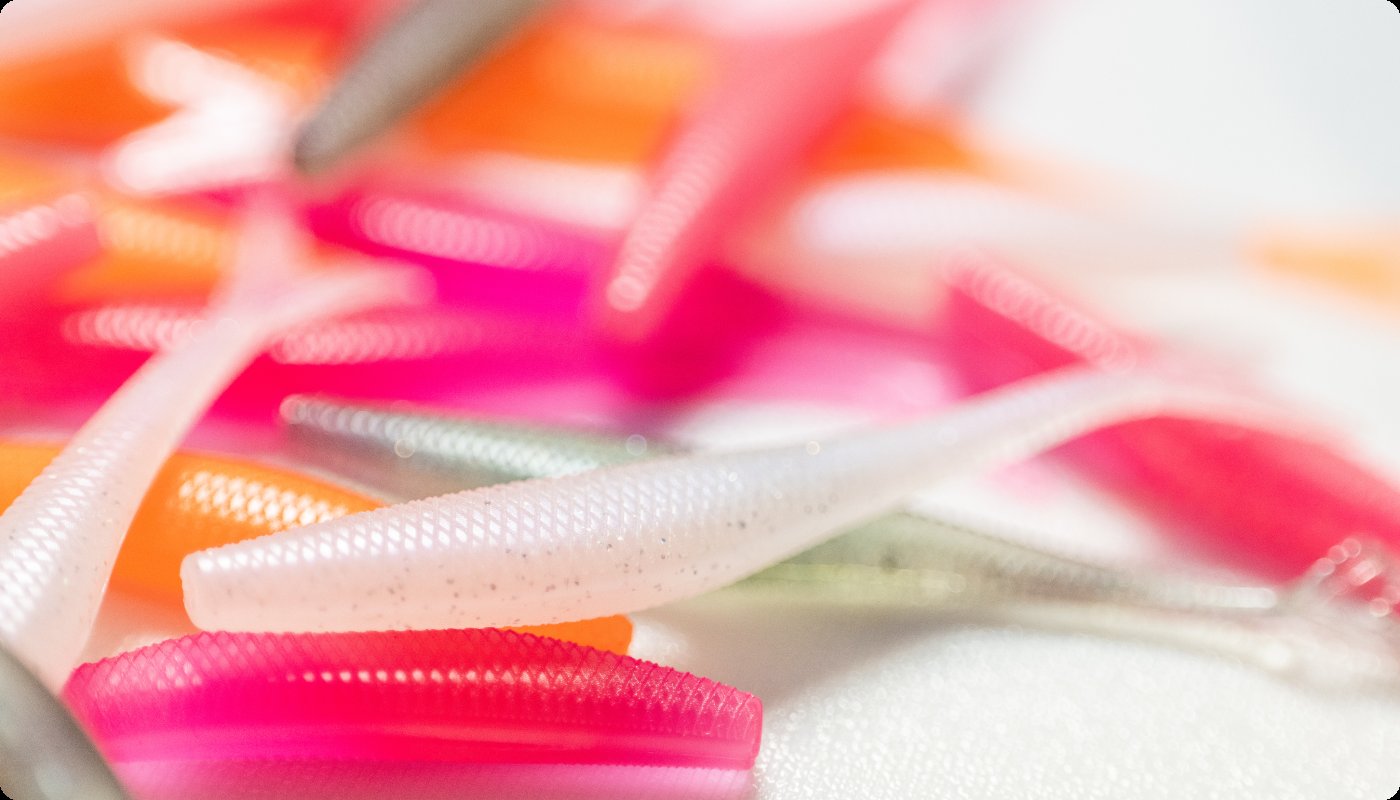
Start slow and subtle. Cal Kellogg opens with soft plastics, a Trix Worm and Trix Minnow on an action disc run naked, plus a scented grub and a threaded worm behind a Mini Willow Leaf Dodger. Troll 1.5 to 1.8 mph in the top 10 feet.
When do I speed up and add spoons in spring?
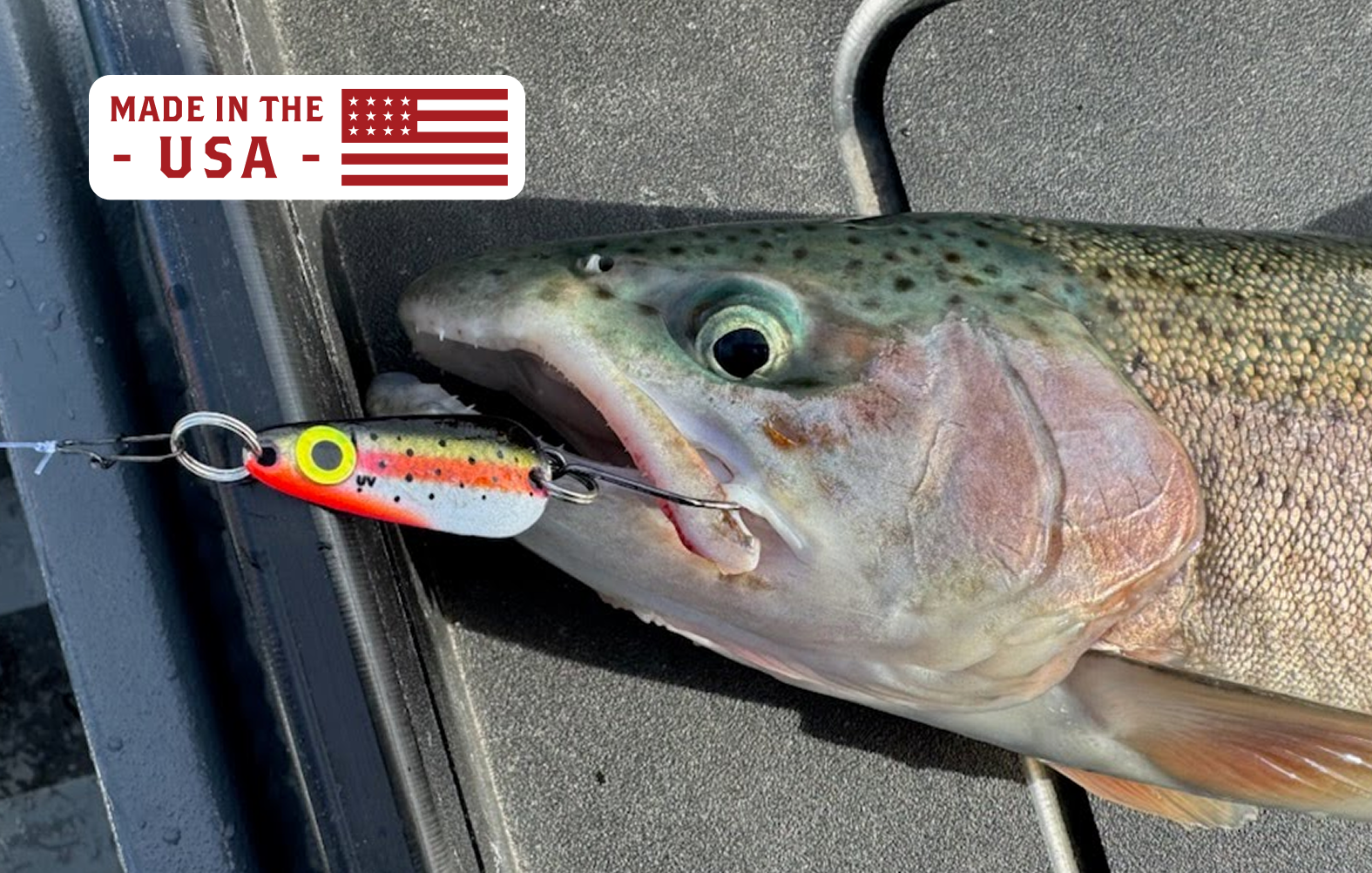
When your sonar shows the surface temperature climbing a degree or two. Then bump the speed and add a Trigger Spoon Junior or Pinhead at 1.8 to 2.2 mph, plus a bright Metal Head fly. Spoons run clean on leadcore, never behind a dodger.
How do I use a small dodger for spring worms?
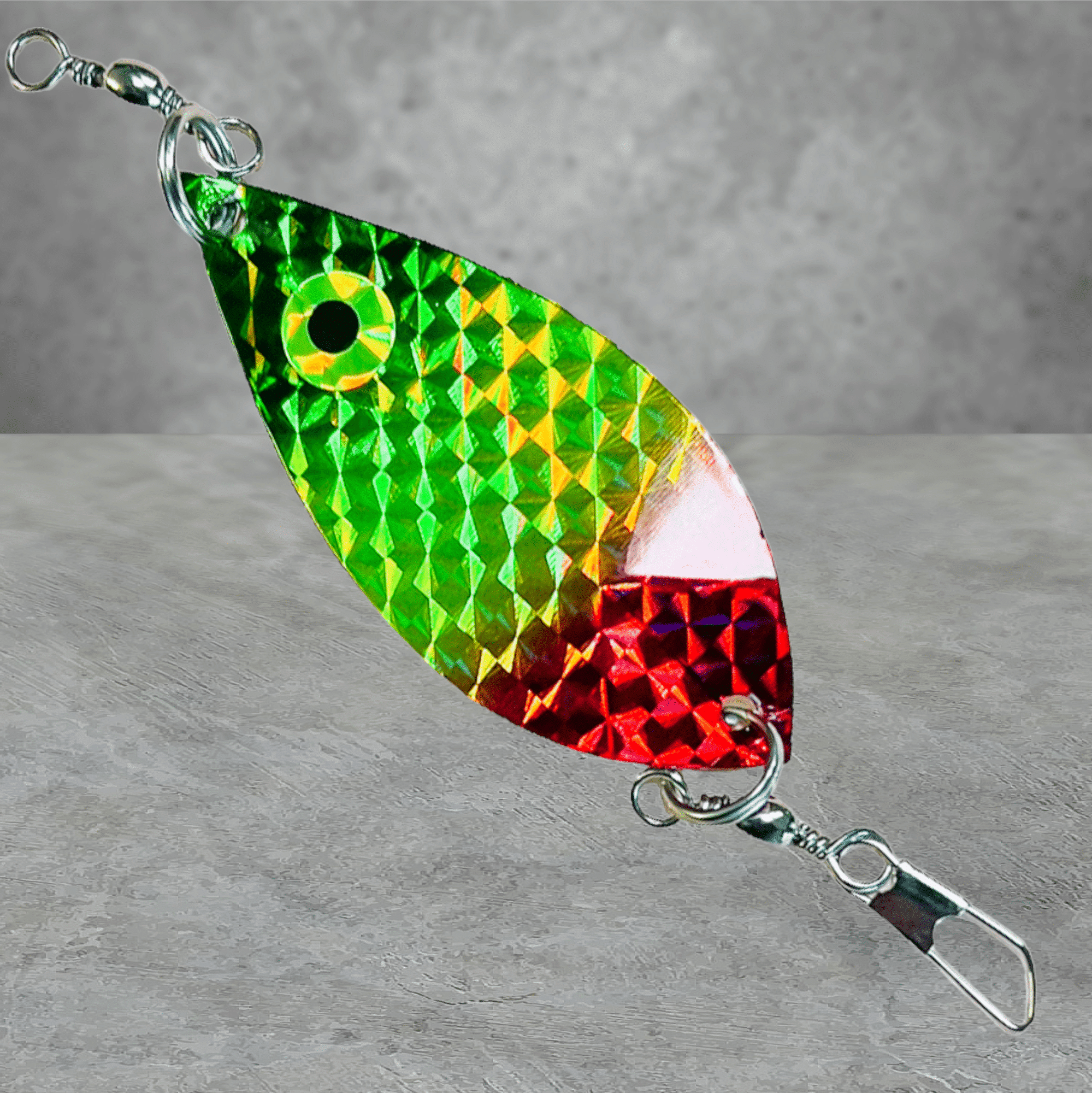
Think of the small blade as a business card. Run a Mini Willow Leaf Dodger or a Turbo Flasher with the worm or grub 16 to 24 inches behind it. The blade draws fish within range, then they smell and taste the scented bait and it is game on.
Where do trout hold in early spring?
Shallow water that warms first. Fish the backs of dead-end coves, bottlenecks where the lake necks down, submerged flat points next to deep water, and mud-flat bays. These spots can run several degrees warmer than the main lake, so trout get active there before anywhere else.
Why is scent important for spring trout?
Spring trout are often neutral because of shifting weather and fluctuating temperatures. Slathering soft plastics and grubs with Trigger Scent makes the bait feel and taste real, so a nipping fish holds on long enough to get the hook. Sweet corn and anise are Cal's spring favorites.
Does wind hurt spring trout fishing?
Big wind, especially a north wind, is tough. It upwells cold water from below and chills the surface zone where the most active fish hold. You can still catch fish, but you have to slow down and grind areas where your sonar shows fish. Bright, calm days fish best.
How do storms affect the spring bite?
A passing storm resets everything, dropping surface temperature and pushing trout off the shore. After the front you get a period of north wind. Give it 3 or 4 days of stable weather and the water starts warming again, dropping you right back into the early spring pattern.
Watch the technique
Spring trout trolling FAQ
Around 49 to 50 degrees you can catch fish, and the bite improves as the surface climbs. Rainbows are most comfortable near 56 degrees, so as spring water warms toward that mark the fish get more active and willing to chase.
Start at 1.5 to 1.8 mph with soft plastics and worms in the morning. As the water warms, work up to 1.8 to 2.2 mph with small spoons and flies, and later in the day push to 2.2 to 2.7 as fish get aggressive.
Cal leans on bright colors in spring, bright pink, bright orange, and sunburst blends on the Metal Head fly. That fly often catches the single biggest trout of the day, so keep one in the spread even when other baits are producing.
Yes. Rig one rod for bait with PowerBait or inflated worms in shallow water, and a second rod for casting a Trigger Spoon Junior, Pinhead, or a Trigger Bugger under a clear-water bobber. Stay mobile and move on if a spot goes quiet after 20 to 40 minutes.
Secluded, dead-end coves warm before the rest of the lake and get little boat traffic. Trout that wintered there come to life first as the water heats, so the back of a quiet cove can be red hot while the main lake is still slow.
Run three or four different offerings until fish tell you what they want. Two fish on the same bait, depth, and color is a pattern worth doubling up on. Make small changes in speed, depth, and color rather than one big change.
Early spring is one of the best times to pull small minnow plugs, especially in the late morning and afternoon as fish get aggressive. Bump your speed to 2.2 to 2.7 mph and keep the plug shallow where the most active fish hold.
- Trix Worms 3 inch - Trout Soft Bait - 5 Pack
- Trix Minnows 3 inch - Trout Soft Bait - 5 Pack
- Trix Grubs 3 inch - Trout Soft Bait - 5 Pack
- Junior Trigger Spoon 1.25 inch - Trout & Salmon
- Pinhead Spoon - Trout Trolling Spoon
- Trigger Spoon 2.25 inch - Trout & Landlocked Salmon
- Metal Head Fly - Trophy Trout Trolling Fly - 2 Pack
- Trigger Bugger - Trout Trolling Fly - 2 Pack
- Mini Willow Dodger - Kokanee & Trout
- Turbo Flasher
- Trigger Scent UV Gel by Cal Kellogg
Shop the Tackle
- Trigger Spoon 2.25" - Trout & Landlocked Salmon
- Junior Trigger Spoon 1.25" - Trout & Salmon
- Speed Spoon 2.5" - Power Trolling Spoon
- Optimizer Size 3 3.625" - Trout & Salmon Trolling Spoon
- Optimizer Size 4 4.25" - Trout & Salmon Trolling Spoon
- Trix Minnows 3" - Trout Soft Bait - 5 Pack
- Trout
- Spoons
- Dodgers & Flashers